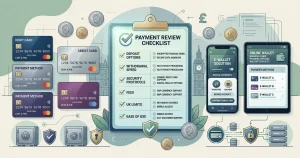
UK casino debit-card payments depend on the card product, cashier availability and the casino’s ordinary account rules.

Debit cards are a familiar way to add money to a UK casino account. Many UK casinos accept cards issued by Visa or Mastercard, so a card may appear alongside other payment choices in the cashier. For you, the basic distinction is that a debit-card payment draws on money held in, or available through, a bank account rather than borrowing on a credit card.
That distinction matters because the rules for the two card types are different. A debit card is not a credit card simply because both carry a card-network logo or look similar. The account and product behind the card determine which kind it is. If you are unsure, check with your bank before attempting a gambling payment.
At a casino, a debit-card deposit is a way to move funds from your payment account into your gambling balance. It does not change the games or create a separate kind of casino account. Once the money is credited, it sits in the account balance and is used under the casino’s ordinary rules. The card is the funding route, not a guarantee that every transaction will be accepted.
If you’re looking for a casino that accepts debit cards in the UK, check the payment options and terms directly before depositing. The details below give you the stated payout speed for each listed operator.
Chanze
Chanze has a stated payout speed of 1–3 business days. No debit-card acceptance details are provided here.
Dieselwin
Dieselwin has a stated payout speed of 1–3 business days. No debit-card acceptance details are provided here.
WinBeast
WinBeast has a stated payout speed of 1–3 business days. No debit-card acceptance details are provided here.
Jetsetspins
Jetsetspins has a stated payout speed of 1–3 business days. No debit-card acceptance details are provided here.
NightWin
NightWin has a stated payout speed of 1–3 business days. No debit-card acceptance details are provided here.
Britsino
Britsino has a stated payout speed of 1–3 business days. No debit-card acceptance details are provided here.
Amunbet
Amunbet has a stated payout speed of 1–3 business days. No debit-card acceptance details are provided here.
EvoSpin
EvoSpin has a stated payout speed of 1–3 business days. No debit-card acceptance details are provided here.
Zombillion
Zombillion has a stated payout speed of 1–3 business days. No debit-card acceptance details are provided here.
Revery Play
Revery Play has a stated payout speed of 1–3 business days. No debit-card acceptance details are provided here.
The credit-card restriction is firm. The regulator banned credit-card gambling on 14 April 2020, and the rule has not been relaxed. UK-licensed casinos cannot accept credit-card payments for gambling deposits. The restriction also covers credit-card funding routed through a money service business, so using an intermediary does not make a prohibited payment acceptable.
This is why it is important not to treat “card payment” as one broad category. A debit card linked to a bank account and a credit card that borrows against a credit facility may be processed through similar-looking checkout screens, but they are not interchangeable for gambling. If a payment card is a credit product, do not use it to fund gambling at a UK-licensed casino.
Wallets do not provide a workaround either. UK rules also prevent remote gambling operators from accepting wallet payments where the wallet allows credit-card funds to be used for gambling. The relevant issue is not only the label shown at the cashier, but whether credit-card money is being used to fund the transaction. If you are uncertain about how a wallet is funded or what sources it permits, clarify that before paying.
For a debit-card online casino, the practical starting point is therefore simple: the payment instrument must genuinely be a debit card, and the casino must be entitled to serve customers in the UK. Online gambling is legal in the UK at licensed and regulated sites; remote gambling licensees serving the British market need the relevant Gambling Commission licence. A site displaying a card logo is not, by that fact alone, proof of its regulatory status.
Debit cards are popular in part because many people already use them for ordinary account payments. That familiarity can make the deposit process feel straightforward, but it is still a gambling transaction. Keep the distinction clear between spending money already available through your bank account and borrowing. A debit card may be connected to an account with an overdraft facility, but that does not turn it into a credit card; it also does not mean you should assume borrowed funds are available or suitable for gambling.
When people look for an online casino with debit card payments, they may expect one universal experience. In practice, the broad fact that UK casinos commonly accept Visa and Mastercard does not mean every card product or every customer will be eligible at every site. The cashier is where an operator presents its available payment routes, while the bank may also apply its own checks. Those details are worth treating separately from the general rule that debit cards are a common funding method.
The same care applies to language on casino pages. A reference to “cards” may not tell you whether the site means debit cards, credit cards, or both in a general description. In the UK gambling context, the permitted route is debit, not credit. If the wording is unclear, do not infer that a credit card is allowed because a site lists a card network or shows a generic card symbol.
A debit-card casino online is not a special category of gambling site. It simply describes a casino account that can be funded by an eligible debit card. The key distinction at this stage is between a payment source that draws on a bank account and a credit facility that cannot be used for gambling deposits at UK-licensed casinos. Keeping that distinction in mind makes the basic payment landscape easier to understand without assuming that every card will work in every cashier.
A casino accepting debit cards is only one part of a useful comparison. Before you decide where to open an account, look at the payment terms alongside the welcome offer, ongoing promotions and the site’s regulatory information. The aim is to understand what you can use and what conditions attach to it, not to choose on the strength of a headline bonus.
Start with the offer’s full terms. Check whether a debit card deposit qualifies, whether the promotion applies automatically or has to be selected, and whether any payment methods are excluded. A bonus advertised on the home page may not apply to every deposit route. If the terms are unclear about card payments, ask customer support to confirm the position before you deposit, and keep a record of the answer.
Payment method exclusions are not limited to cards. A specialist review has reported that PayPal can be excluded from bonus eligibility, while Skrill and Neteller are often left out of promotions. These details can change between operators and offers, so treat them as a prompt to check the current terms rather than as a rule for every casino. If you plan to use one of these services, confirm that the specific promotion accepts it before relying on the advertised offer.
The headline amount tells you little about whether a promotion suits you. Read the complete bonus conditions and consider whether you understand what is required to claim and use it. Look for the eligible deposit methods, the games covered, any playthrough requirements and the rules that apply before a withdrawal. If a condition is difficult to interpret, it is reasonable to leave the offer alone until the operator explains it clearly.
Also check how the terms treat different parts of your balance. A casino may distinguish between deposited funds and promotional funds, and the rules for using or withdrawing them may differ. Make sure you know whether accepting a bonus changes the conditions attached to your own deposit. If you would rather keep a promotion separate from your play, check whether you can decline it or opt out.
This is one reason there is no single best debit card casino for every player. One person may value a straightforward deposit route and clear terms more than a large promotion; another may not want bonus conditions at all. Compare the actual rules with how you intend to use the account, rather than treating the biggest advertised offer as the best choice.
For real-money gambling in Great Britain, the operator must hold the relevant UK Gambling Commission licence. Check the licence number against the Commission’s public register before depositing. A familiar payment logo does not establish that a casino is authorised to serve customers in the UK, and a polished site does not replace that check.
Read the account terms as well as the promotional page. Look for clear explanations of how offers are activated, how to contact support about a disputed promotion and what complaint route is available. UKGC licensees must provide an internal complaints process and access to an approved Alternative Dispute Resolution service. Knowing where those details are located gives you a practical route to follow if a payment or offer is handled differently from what you understood.
You can also assess the quality of the information before signing up. Terms should be accessible and specific enough for you to identify which deposit methods qualify and what accepting an offer means. If the explanation is hard to find or leaves a material point unresolved, do not assume the most favourable interpretation will apply. Contact the operator first or choose a different offer.
A simple comparison can keep the choice grounded. For each site you are considering, note whether debit card deposits are described in the payment terms, whether the offer you care about accepts that method, and whether the operator’s licence details and complaints information are easy to verify. Keep the comparison focused on the terms that affect your decision; payment availability and promotional eligibility can differ even when two casinos appear similar.
Do not treat every payment route as interchangeable for bonus purposes. A promotion may accept a card deposit but exclude a particular wallet, or set conditions that make the offer unsuitable for you. Conversely, a payment method being excluded from a bonus does not by itself mean that the underlying account is unusable. Decide whether the promotion matters, then check the terms that apply to the route you plan to use.
If the offer’s wording, payment conditions or licence details do not make sense, pause before opening the account or depositing. A clear explanation in advance is more useful than trying to resolve a misunderstanding after you have accepted a promotion.
When you deposit by debit card at a UK casino, the amount you can add is shaped by more than the balance in your bank account. The casino sets payment limits, and the limits available to you may depend on the method selected and the status of your account. Before entering an amount, check the cashier’s stated minimum and maximum rather than assuming the same figures apply to every card transaction.
A specialist review of casino payment terms places the starting deposit at around £10–£20, with the exact minimum depending on the payment method. Treat that as a guide, not a promise that every casino or every debit card will accept the same amount. The cashier should show the minimum for the option you have selected. If your intended deposit falls below it, the transaction may not go through; if the displayed minimum is higher than you are comfortable with, do not raise your deposit simply to meet it.
Maximums can be set at different levels. A casino may apply a ceiling to one transaction, a separate daily cap and another monthly cap. These are not necessarily identical across payment methods, and an account’s status can also affect the limits that apply. A specialist review reports this variation, but the relevant figures are operator-specific. Read the cashier’s current terms and any limit notices on your account before submitting a payment. Do not assume that a displayed per-transaction maximum is also the amount you can deposit across a day or month.
Your own account controls matter alongside the payment limits. UK Gambling Commission requirements mean a remote gambling licensee must ask a new customer to set a financial limit before that customer makes a first deposit. The operator must also make account-level limit controls accessible. In practice, this means you should be able to find the controls through your account rather than having to rely solely on the cashier’s payment caps.
Take the prompt seriously, and set a limit that reflects what you can afford to spend. A card’s available balance is not a safe spending target, and an operator’s maximum is not a recommendation. The casino’s payment ceiling governs what it will process; your financial limit is a separate tool for managing your own gambling. A larger permitted transaction does not mean you need to use it.
It is worth pausing at the limit-setting stage instead of clicking through to fund the account quickly. Check what the control applies to, how it is displayed in your account and whether the figure you are choosing is one you can maintain. If you are unsure what a setting covers, use the operator’s help information before depositing. Do not treat a change to a limit as a way to make an unaffordable payment workable.
Once you have chosen an amount, compare it with the cashier’s minimum and the account controls before confirming the debit-card payment. If the payment screen presents a maximum that differs from what you expected, stop and check the terms for that card option. Limits can be payment-specific, so switching to a different route may change what the cashier allows; it does not remove the need to stay within the financial limit you set.
These checks are particularly useful when you have not deposited with that casino before. A minimum shown in a general payment guide may not match the live cashier, while maximums can differ according to the method and account status. The figures presented in your account are the ones to consult for that transaction. Keep the distinction clear: the cashier determines whether a deposit falls within its payment rules, while the account-level controls give you a way to set financial boundaries before you play.
A payment logo on a casino’s information page is a useful starting point, not confirmation that your own card will work. Specialist payment reviews list Visa and Mastercard among the methods shown by the sites they cover, but availability can change and eligibility may depend on the card product or your account. Check the cashier after signing in, before entering payment details or attempting a deposit.
Look for the exact debit-card option displayed for your account. A general reference to cards does not tell you whether the cashier currently accepts your particular card product. If the option is missing, or the payment screen does not make clear whether your card qualifies, contact the operator before trying another route. Repeated attempts are unlikely to resolve an eligibility issue and can leave you unsure which payment method was actually selected.
Keep the distinction between a debit card and a credit card clear. UK-licensed casinos cannot accept credit-card payments for gambling. A card logo alone does not establish that a card is eligible: the product itself matters. If you are uncertain about the type of card you hold, check with the card issuer before paying. Do not assume that a payment will be treated as a debit-card deposit simply because it draws on a card account.
The cashier is also the place to confirm the currency attached to your casino account. Specialist payment pages state that GBP is supported, but that does not by itself confirm the currency selected for your account. Check the account or cashier settings before your first transaction and look at the currency shown beside the amount you are about to deposit. If the account is set to another currency, a payment made from a UK bank account may involve conversion.
That check matters even when the amount looks familiar. The figure displayed on the payment screen needs to be understood in the account’s currency, not assumed to be pounds because you are in the UK. If the currency is unclear, pause and ask the operator to confirm it rather than proceeding on a guess. You can then decide whether to continue once you understand how the deposit will be recorded.
Treat the payment screen as a final compatibility check, not as a reason to bypass an unclear result. Confirm that the debit-card method is available to you, that the card product is eligible, and that the account currency is the one you expect. If any of those details do not match, resolve the discrepancy before authorising the transaction.
A debit-card deposit may appear in a casino account immediately, but that does not mean a later payout will follow the same route at the same speed. A specialist casino-payment review describes card withdrawals as potentially taking several business days. The difference is that a withdrawal may need to pass through the casino’s own approval process before the payment is sent, then be processed by the relevant payment route.
That internal review is part of the withdrawal, not simply the time it takes for money to reach your bank. The casino may need to check the request and confirm that the account is fully verified. The first withdrawal can take longer if KYC checks are still being completed. Until those steps are finished, a payout may remain pending even if the deposit method seemed instant.
UK anti-money laundering rules generally require a casino to return funds to the original payment source. If you deposited by debit card, that can mean the casino directs the eligible amount back to that card rather than letting you choose any destination. Closed-loop rules are also an anti-fraud control: a casino needs to account for where funds came from and where they are being returned. The cashier’s withdrawal instructions should explain how the route applies to your account.
A debit-card casino withdrawal can therefore involve more than one stage: the casino approves the request, then the payment is processed through the relevant route. The time shown for a payout may refer to the full process or only one stage, so read the operator’s wording carefully. If the request is still awaiting approval, the funds have not necessarily been sent to your card yet.
Some specialist payment reviews place PayPal, open banking services and debit cards connected to fast payout systems among the quicker withdrawal options. That is not a promise that any one route will be fast at every casino. The casino’s approval process and your verification status still matter, and the available route depends on the account and cashier. A different method may also have its own processing steps.
Before submitting a casino withdrawal to a debit card, check whether your account has any outstanding verification requests and read the stated processing information in the cashier. If the payout is delayed, distinguish between a request still under casino review and one already sent for payment. The operator can clarify which stage it has reached; your bank or payment provider may be relevant once the casino confirms that it has released the funds.
For an online casino debit-card payout, the useful expectation is not that it will match the speed of a deposit, but that approval, KYC and payment processing all affect the journey. Check the casino’s stated route and status rather than assuming that an instant card deposit means an instant withdrawal.
When you use a debit card at a casino, keep the account and payment details in your own name. A casino account registered to you and a card belonging to someone else do not present a clear match. Even where the payment is technically possible, a difference in ownership details can create avoidable questions or delay while the transaction is checked.
The same principle applies to the information you enter. Use accurate personal details on your casino account and make sure they correspond to the details associated with your card. A shortened name, an old address or a spelling difference may seem minor, but inconsistencies can make it harder for an operator to confirm that the account and payment route belong to the same customer. If your details have changed, update the relevant account information rather than relying on an outdated version.
For a debit card casino UK account, it helps to decide which payment route you intend to use and keep to it where practical. The clearest arrangement is often one named account used consistently for deposits and withdrawals. This gives the operator a straightforward way to follow the movement of funds and reduces the chance that basic ownership details become a point of friction.
Switching between payment routes is not automatically a problem, but it can make the transaction history less simple to follow. If you move from a card to another method, check that the new route is available for your account and that it is registered to you. Do not assume that a family member’s card or account is interchangeable with your own. Matching names matter because the operator needs to establish who is making the payment, not merely whether the payment can be sent.
Keep a record of which named route you used. That can help if you later need to identify a transaction or explain why a payment appears under a particular account. If a payment is declined or the operator asks you to clarify ownership, respond using the details linked to your own account and follow the instructions provided. Avoid making repeated attempts through different people’s cards or accounts; that can make the ownership picture harder to understand rather than clearer.
Straightforward Transactions
Match Account Details
Ensure the casino account is registered in your own name and matches the details on your debit card.
Update Personal Info
Correct any old addresses or spelling differences to prevent friction during ownership verification.
Maintain Consistency
Use one named account consistently for both deposits and withdrawals to simplify the transaction history.
These habits are useful whether you are using a debit card casino in the UK for the first time or returning to an account you already hold. They do not guarantee that every transaction will proceed without a check, since the operator remains responsible for handling payments appropriately. They do make the basic account-to-payment relationship easier to follow: your casino account, your personal details and your named payment route all point to the same customer.
The amount entered at the casino is not always the full cost of a deposit. Charges may come from the casino, the payment provider, your card issuer or bank, currency conversion, or the payment network. Which ones apply depends on the route and the transaction, so a debit card cannot be labelled the cheapest option without checking the details.
A specialist payment review notes that the exchange-rate spread can be less obvious than a stated fee and may cost more than a flat charge. A spread is the difference between the rate used for your conversion and a reference exchange rate. You may not see it listed as a separate line, so compare the amount that leaves your account with the value credited to your casino balance.
For a useful comparison, check the terms for the specific deposit amount and payment route you intend to use. Look for any casino charge, then check whether the provider or your bank adds a fee. If the transaction involves currency conversion, find out which rate will be applied and whether the casino, provider or card issuer handles the conversion. Include any network cost if it applies. Comparing only the casino’s displayed fee can leave out charges elsewhere in the chain.
The practical measure is the total cost of getting the intended amount into your account: the deposit value plus all fees and the effect of conversion. Where the terms do not make a charge clear, check with the relevant provider before paying rather than assuming it is zero. Keep the currency and amount consistent when comparing routes; otherwise, the figures may not be directly comparable.
There is no single payment method with the lowest cost for every customer or transaction. A route with no visible flat fee may still have a costly conversion spread, while another may charge explicitly but use a different exchange rate. Compare the actual total for your card deposit, including charges outside the casino, before deciding which option suits you.
A debit card is a way to put money into your casino account; it does not change how a slot works. Once funds are available, you choose and play games through the casino’s usual interface. There is no separate category of “debit card slots”, and a slot does not know which payment route you used.
UK casinos commonly accept debit cards, including Visa and Mastercard. That means you may be able to fund an account by card and then use its balance for online slots, subject to the site’s terms and the options shown to you. The payment step and the game itself are separate: card acceptance does not alter a slot’s features, rules or pace.
The rules for online slots in Britain apply regardless of how you funded your account. Autoplay is banned, so you must start each spin yourself. Each spin must also last at least 2.5 seconds. These requirements concern how the game is played, not whether your account was funded with a debit card.
When looking at debit card casino sites in the UK, keep that distinction clear. The card is a funding method, not a way to bypass game controls or change the conditions of play. Online gambling is legal in the UK only at sites licensed and regulated for the market, and remote gambling licensees must check your age before allowing a deposit. If you decide to play, use a licensed casino and treat the balance in your account as money set aside for gambling, rather than as part of your everyday spending.
A debit card is not the only route you may find at a UK casino cashier. Some UK Gambling Commission-licensed casinos accept Apple Pay for deposits, while others show bank transfer or open banking options. The cashier is the useful place to confirm what is currently available to your account; a method mentioned in general site information may not appear for every customer.
A specialist payment review describes open banking and bank transfers as routes that can provide instant deposits and fast withdrawals at many sites. That is not a promise about every operator or transaction. Check the cashier’s terms for the specific route, including whether it supports both paying in and cashing out. Bank transfers can also be affected by cut-off times, weekends and currency conversion, so a quick deposit does not by itself tell you how a withdrawal will be handled.
Apple Pay is a deposit option where offered, but do not assume that seeing it means it can also be used to receive a payout. Payment methods can have different roles: Paysafecard, for instance, is deposit-only. If you want one route for both directions, confirm that before funding the account rather than choosing on the basis of the deposit screen alone.
These alternatives do not make a casino more suitable by themselves. Compare the available routes against what you need, and avoid adding a payment method simply because it appears in a list. If you are considering a live casino, the payment route still funds your casino account; it does not change how the games work. Only use a site holding the appropriate UK Gambling Commission licence for customers in Great Britain, and check the relevant details before depositing.
A Visa logo does not, by itself, confirm that a card will work at a particular casino. Some specialist casino reviews list Visa as a payment option, but availability can change, and eligibility may depend on the specific card product. Sign in and check the cashier before you try to deposit; look for Visa debit as an available route rather than relying on a general payment-method list.
Check the card itself, too. A Visa debit card draws on funds in your bank account, while a Visa credit card lets you borrow from the issuer. The distinction matters: UK-licensed casinos cannot accept credit-card payments for gambling. The regulator introduced that ban on 14 April 2020, and it remains in force. A Visa credit card is not an acceptable substitute if a debit-card payment fails.
If the cashier shows Visa but your card is declined, do not assume that all Visa debit cards are supported or keep retrying without checking. Confirm that the card is a debit product and that the displayed option applies to your account. If the distinction between debit and credit is unclear, your bank can confirm the card type.
For a safe debit-card casino transaction, use the cashier as the final check before entering payment details. It should show whether Visa is available for your account and let you select the relevant card route. A logo elsewhere on the site is not enough to establish that your particular Visa debit card is eligible.
No. Visa and Mastercard are card networks, and a logo alone does not confirm that your card is a debit card. Check the card type with your bank and confirm it is accepted in the casino cashier.
The minimum deposit usually starts at £10–£20, depending on the payment method.
Yes, GBP is supported. Check your account currency before your first deposit to avoid currency conversion.
There is no universally cheapest method. Compare the casino’s charges, payment-provider or bank fees, currency-conversion spread and any network costs for your transaction.
Returning funds to the original payment source is a common anti-fraud and anti-money-laundering control. Using a different source may involve additional verification.
PayPal, open banking services and debit cards linked to fast payout systems are generally among the quickest. The casino’s approval process and whether your account is verified also affect timing.
Verification may be needed, particularly before a first withdrawal, and an account that is not fully verified can face delays.