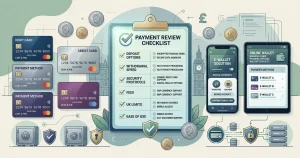
Card-network support, account eligibility and cashier limits can affect deposits, withdrawals and returned funds.

A debit card gives you a direct way to move money from your bank account into a casino account. UK casinos commonly accept debit cards, including Visa and Mastercard, so this payment route may appear alongside other options in a casino’s cashier. That broad acceptance does not mean every card will work everywhere: the operator must support the card network, and the particular card product must be eligible.
The basic process starts inside the casino account. You choose the debit-card option in the cashier, enter the requested card and payment details, and specify a deposit amount within the options shown. The payment is then sent for authorisation. If it is approved, the casino credits the account; if it is declined, the deposit is not completed. The cashier should show the payment options available to you, rather than relying on a general statement that a casino accepts cards.
Visa and Mastercard are networks, not a guarantee that every card carrying their logo can be used for gambling transactions. A debit card issued by a bank may have restrictions, or the operator may not accept that card product. A specialist review may list Visa or Mastercard among a casino’s payment methods, but current availability for UK customers and eligibility for your specific card need to be checked in the cashier. Treat a network logo on a review page as an indication to investigate, not confirmation that your own payment will go through.
When choosing a UK casino that accepts debit cards, you should check the payment details as well as how quickly withdrawals are processed. Use the payout information below as one point to consider.
Chanze
You can factor in a stated payout speed of 1–3 business days when considering Chanze.
Dieselwin
Dieselwin lists a payout speed of 1–3 business days, which you can consider when reviewing its payment details.
WinBeast
You can take WinBeast’s stated payout speed of 1–3 business days into account.
Jetsetspins
Jetsetspins has a stated payout speed of 1–3 business days for you to consider.
NightWin
NightWin lists payouts at 1–3 business days, a detail you can weigh when looking at payment options.
Britsino
You can consider Britsino’s stated payout speed of 1–3 business days.
Amunbet
Amunbet lists a payout speed of 1–3 business days, which may be useful as you review its payment details.
EvoSpin
EvoSpin’s stated payout speed is 1–3 business days, giving you one payment detail to consider.
Zombillion
You can factor Zombillion’s listed payout speed of 1–3 business days into your review.
Revery Play
Revery Play lists a payout speed of 1–3 business days for you to consider.
When you select a card option, follow the cashier’s instructions carefully and use the payment details requested there. The name on the casino account and the details associated with the payment route should belong to the same customer. Using your own account and card consistently reduces the chance that a basic ownership mismatch will cause avoidable friction. If a payment is refused, check whether the cashier gives a reason before trying again; repeated attempts may not resolve a restriction on the card or the account.
The cashier is also where you can see whether card payment is available at that moment. Payment options can differ between operators, and a method mentioned in a review or displayed on a general information page may not appear for every customer. The site’s payment page may describe the networks it supports, but the live cashier is the practical place to confirm which option is offered for your account. Do not assume that a card accepted by one casino will necessarily be accepted by another.
A debit-card deposit is separate from the card’s other functions. Having a Visa or Mastercard debit card does not, by itself, establish that the casino supports it for deposits; likewise, seeing a card method listed does not prove that every product issued on that network is accepted. If the cashier does not show a card option, or does not accept the card details you enter, contact the operator through its support channel rather than trying to substitute somebody else’s card.
It is useful to distinguish the stages of a card payment. First, the casino presents the payment route and asks you to provide the relevant details. Next, the transaction is checked and authorised. Finally, the casino updates your balance if the payment succeeds. A delay or failure at one stage does not necessarily mean the same thing as a card being unsupported: the transaction may have been declined, details may not match, or an account or payment restriction may apply. Check the message shown and, if needed, ask the casino or your card issuer for clarification.
For a first deposit, take a moment to read the cashier’s prompts before submitting. Confirm that you have selected a debit card rather than another route, entered your own details accurately and chosen an amount the page accepts. If the operator provides a payment-method description, compare it with what the cashier actually offers. A card network’s name is useful, but the live options and the card product itself determine whether you can complete the transaction.
Card Deposit Process
Selection
Choose the debit-card option in the casino cashier and enter the requested card and payment details.
Amount
Specify the deposit amount within the available options and send it for authorisation.
Credit
If approved, the casino credits the account; if declined, the deposit is not completed.
This is the practical meaning of looking for an online casino with debit-card deposits in the UK: the site needs to offer a card route, and your own debit card must be accepted through it. Visa and Mastercard are common options, but acceptance is not universal. Check the cashier for the current route before relying on a payment method mentioned elsewhere.
A debit card bearing a familiar network logo is not, by itself, proof that a deposit will go through. Acceptance can depend on the casino, the card product and the details held on your account. Before entering payment information, open the cashier and check the available card options for your own account. This is a more reliable check than relying on a general statement that a casino accepts debit cards.
UK casinos commonly list Visa and Mastercard debit cards, but availability is not identical at every site. A specialist review may describe a casino as supporting a network, while the cashier is the place to confirm whether the route is currently offered to you. Look for the card option after signing in, rather than assuming that a network logo on a general payments page guarantees that your particular card can be used.
Check the wording carefully. A payment page may display a network name without explaining which card products are eligible. If the cashier provides a card-specific explanation, read it before continuing. If the information is unclear, ask the operator to confirm whether your card type is accepted. Do not try another route simply because it appears beside the card option; first establish what the site actually supports.
Also make sure you are looking at the deposit section of the cashier. Payment choices can be presented differently according to what you are trying to do, so a method shown elsewhere on the site should not be taken as confirmation that it is available for the transaction you have in mind. The relevant check is the payment option shown for your account at the point you are preparing to pay.
Confirm that the casino account is set to GBP before making the first transaction. Some specialist review pages report GBP support, but that does not establish the currency selected for an individual account. Check the account settings or the currency shown in the cashier. If the displayed currency is not GBP, pause and find out whether it can be changed before you proceed.
A mismatch can mean that the amount leaving your bank is converted rather than treated as a straightforward sterling payment. This is why it is worth checking the account currency before entering a deposit amount, not after a transaction has been submitted. If you cannot tell which currency will be used, ask the operator rather than relying on the currency symbol shown in a general promotion or on another part of the site.
Keep the amount and currency shown in the final payment screen in view as you review the transaction. That screen should let you check what you are authorising. If it does not make the currency clear, do not assume it is GBP simply because you are in the UK or because the site serves UK customers.
Use your own casino account information and a payment route that belongs to you. When the account holder and payment method have matching ownership details, there is less scope for basic identity differences to cause avoidable friction. This is a practical consistency check, not a promise that every payment will be approved.
Enter your details as they are held by the relevant provider, and review them before submitting the payment. Take care with spelling and with any account information the cashier asks you to provide. If you have changed a personal detail, make sure the casino account reflects the correct information rather than entering a different version to force the transaction through.
If the card is not in your name, or the casino account uses information that does not match the payment route, stop and check the operator’s requirements first. Do not assume that a family member’s card or a shared payment arrangement will be accepted. The cashier or the operator’s help service can clarify what the site permits for your account.
If the cashier rejects the card, reread the message and check the information you entered. Confirm that the card option was available for your account, that the card details were entered correctly, and that the account currency is understood. If the reason is still unclear, contact the operator before making another attempt.
A declined payment does not necessarily tell you whether the issue is with the card product, the account details or the casino’s current payment options. Avoid guessing at the cause or repeatedly submitting the same transaction. Ask the casino what needs attention, and contact your card provider if you need to confirm a card-specific restriction.
These checks help you establish whether your own card and account are compatible before you authorise a deposit. A casino may accept debit cards in general while your particular card or account setup remains unsuitable, so rely on the signed-in cashier and clear account details rather than a broad claim about card acceptance.
A debit card is not automatically the least expensive way to fund a casino account, just as an e-wallet or bank transfer is not automatically cheaper. The cost depends on the route, the amount and the terms applied by the casino, payment provider, card issuer or bank. To compare options fairly, look beyond the fee shown beside the deposit button and consider what could be deducted at each stage.
A specialist payment-cost review identifies several possible charges: a casino fee, a payment-provider fee, a charge from your bank or card issuer, currency-conversion costs and network fees. Not every transaction attracts every charge, and the party responsible can differ. Check the casino’s cashier and payment terms, then look at the relevant provider or bank information where the casino does not explain a charge.
A visible flat fee is easy to spot, but it may not tell you what the transaction will cost overall. If a payment involves currency conversion, the exchange rate may include a spread: the rate used for the transaction can be less favourable than a reference rate. A specialist review of payment costs notes that this difference can outweigh a separately stated flat charge. The comparison therefore needs to include the rate, not only the fee printed on screen.
Before confirming a payment, check whether the amount is being taken and credited in the same currency. If conversion is involved, find out whether it is handled by the casino, the payment service or your bank, and which exchange rate applies. These details can determine the effective cost even when no separate conversion fee is displayed.
The same approach applies to a debit card and alternative routes. For each option, consider the casino’s charge, any provider or bank charge, the conversion rate and any network cost that applies. A route with no casino fee may still have a cost elsewhere. Conversely, a fee shown by one provider does not prove that another route will be cheaper once its own terms are included.
A useful comparison uses the amount you actually intend to deposit and the payment options available to you. Fees can be fixed, linked to the transaction value or built into the exchange rate, so comparing different amounts can give a misleading impression. Check the total deducted from your account against the amount credited to the casino balance, and note any separate charge that appears on your bank or provider statement.
If the cashier shows no fee, do not assume that every part of the payment is cost-free. Read the payment terms and check your bank’s information for charges that may apply to card use or foreign-currency transactions. If the rate is not shown until the payment is authorised, pause before confirming rather than treating the displayed deposit amount as the full cost.
It also helps to distinguish the casino’s own charge from an external one. A casino may state that it does not charge for a particular route, while a bank or payment provider may still apply its own terms. The reverse can also be true: a provider may not charge, but the casino may set a fee or use a conversion rate that affects the amount received. Identify who applies each cost instead of relying on a single “free” label.
Where the cashier offers a choice, compare debit card payments with the other routes actually available to you, such as bank transfer or an e-wallet. Do not assume that a method is cheaper because it is familiar, appears first in the cashier or is described as convenient. Its cost depends on the transaction details and the terms in force for that account.
A specialist payment-cost assessment cautions against treating any one method as the lowest-cost choice in every case. Work through the same set of questions for each option: what the casino charges, whether the provider or bank adds a fee, whether conversion is involved, and whether a network cost applies. Then compare the combined effect for the intended deposit, rather than ranking payment methods in the abstract.
If the terms are unclear, ask the casino or provider to explain the charge before paying. Keep the answer alongside the payment details so you can check the eventual debit against what was disclosed. This is particularly useful when a transaction passes through more than one service, since a fee may appear under the name of the provider rather than the casino.
The practical aim is not to find a payment route that is cheapest for everyone. It is to understand the full cost of the route offered to you, including any exchange-rate effect that is easy to overlook. Compare like with like, verify who sets each charge, and make the decision only when the amount leaving your account and the amount credited are clear.
A debit card can be the route by which money enters a casino account without being the route through which every later payment is made. Deposits and withdrawals are separate transactions, and the available options may differ. When you look at the cashier, pay attention to the instructions for both directions rather than assuming that a method shown for deposits will also be offered for payouts.
The route back matters because a withdrawal is not simply a reversed deposit. UK anti-money laundering rules commonly require a casino to return funds to the original payment source. This helps operators check where money came from and where it is being sent. It is also a common anti-fraud control: sending funds back to the account used to pay in can reduce the risk of money being moved through a gambling account to an unrelated destination.
That closed-loop approach can affect your plans even if you have more than one payment method available. If you deposit by debit card, the casino may direct an eligible withdrawal back to that card or to the associated account. Do not assume you can choose a different route just because it appears in the cashier. An alternative may be considered, but it can require additional verification before the operator releases the funds.
Keep the details of the deposit route in mind and follow the casino’s withdrawal instructions. If a payment route changes, or the original source can no longer receive the money, contact the operator rather than trying to route the payout through another person’s account. The operator may need to establish why the original route cannot be used and confirm that any alternative belongs to you. This can mean further checks, so it is sensible to understand the return process before you rely on a particular way of moving funds.
A card payment can appear in your casino balance quickly, but that does not set the pace for a withdrawal. A specialist review describes card deposits as potentially instant while noting that a payout can take several business days. That is not a promise about every casino or card. The two transactions pass through different processes: a deposit credits money to the account, whereas a withdrawal must be reviewed and sent back through an eligible payment route.
For that reason, do not treat a rapid deposit as evidence that cashing out will be equally rapid. The cashier’s deposit information tells you how money can be paid in; the withdrawal terms explain how a request is handled and where the money may be sent. Read both before making a deposit, especially if you expect to need access to the funds by a particular point. A delay does not necessarily mean the payment has failed, but the operator is the right place to ask for an update if the stated process is unclear.
It is also worth distinguishing the casino’s handling of a withdrawal from the return of the funds to your account. Even after the operator has approved and sent a payment, the receiving route still has to process it. The timing you see may therefore reflect more than one stage. Avoid making assumptions from the time taken for a previous deposit or from a different payment method: those are not a reliable guide to a card withdrawal.
Before submitting a withdrawal request, check that the payment details are accurate and that you are using an account in your own name. Matching the account information and payment route to the same customer can reduce avoidable friction around ownership checks. If the casino asks for documents or clarification, respond through its official account or support channel and provide only what is requested. Further checks may be needed when the payout cannot return to the original source.
A clear view of the full route—deposit, withdrawal request, approval and return—can prevent an inconvenient surprise. Confirm where the casino expects to send funds and what happens if that source cannot accept them. The card may make paying in straightforward, but the return follows its own controls and should be understood on its own terms.
Yes. Debit cards are commonly accepted for online gambling at UK casinos, including cards on the Visa and Mastercard networks. This is different from paying with a credit card: the UK’s rules prohibit credit-card payments for gambling, while debit-card payments remain a permitted option.
The distinction is about the source of the money. A debit card draws on funds in an account; a credit card lets you borrow from the card provider. The fact that both may carry the same network name does not make them interchangeable for gambling. What matters is whether your card is a debit or credit product.
The credit-card ban took effect on 14 April 2020 and remains in place. It applies to gambling payments made to remote operators, so a casino cannot accept a credit card as a way to fund play. Do not assume that routing a credit-card payment through another service makes it acceptable: credit-card funding used for gambling is also restricted when it passes through a money service business or a wallet that permits such funds to be used.
A debit card is not a guarantee that every transaction will be accepted. Casinos may support particular card networks or products, and a bank or card issuer may also decline a payment. Those practical checks are separate from the legal distinction between debit and credit. The important point is that a genuine debit card is not covered by the UK credit-card gambling ban simply because it is used at a gambling site.
Online gambling is legal in the UK for adults aged 18 and over when the operator holds the relevant UK Gambling Commission licence. The ban on credit-card payments does not make debit-card gambling unlawful; it limits the payment types that remote gambling licensees may accept. If you choose to gamble, use a licensed site and a payment method that is genuinely yours and permitted for gambling.
So, you can deposit at an online casino with a debit card where that casino accepts your card product. You cannot use a credit card for the same purpose, including by disguising its funding route. If you are uncertain which type of card you have, check the product details with your bank before attempting a gambling payment.
The minimum shown beside a debit card deposit option is the amount you must be prepared to pay in a single transaction. A specialist casino review reports starting deposits in the £10–£20 range, with the figure depending on the payment method. Treat that as a guide to what may be displayed, not a promise that every casino site accepting debit card deposits will use the same threshold. The cashier’s current terms are the practical reference before you confirm a payment.
The minimum is only one part of the amount to check. A maximum may apply to each transaction, and separate caps may apply across a day or a month. These limits can differ by payment method and account status, so the amount visible for a card payment may not match the limit attached to another route or to another account. A specialist review also describes maximums as variable; check the operator’s own deposit information rather than relying on a figure copied from a comparison page.
Look for whether the displayed cap applies to one payment or to a wider period. If you plan to deposit more than once, a per-transaction ceiling does not tell you how much the account may accept in total. Equally, a daily or monthly cap may matter even when each individual payment falls below the transaction maximum. Where the cashier does not make the distinction clear, check the payment terms or ask the operator before paying.
Your account status can affect the maximum available. A limit shown after signing in may therefore be more relevant than a general figure in promotional material. Do not assume a failed or declined payment means you can simply split the amount into smaller deposits: check the applicable caps first and avoid repeating transactions without understanding the restriction.
For a measured decision, note the stated minimum, the maximum per transaction and any daily or monthly cap. If you are unsure which limit applies, pause and confirm it with the operator. That way, you can decide what amount you are willing to deposit without treating an advertised range as a guarantee.
A debit card deposit can be credited as soon as the payment is authorised, while a withdrawal has additional checks before money is sent. The casino must review the request internally, and the time this takes can depend on its approval process and whether your account is fully verified. A specialist review notes that a first withdrawal may take longer when verification is still being completed.
That means a quick deposit is not a reliable guide to how quickly you will receive a payout. If the casino needs information or documents to complete KYC, the withdrawal may remain pending until those checks are resolved. Make sure any requested details are accurate and that the information on your account matches your documents; responding promptly can prevent avoidable delays, though it cannot control the operator’s review time.
Once approved, the payout still has to be handled through the selected payment route. A specialist review identifies PayPal, open banking services and debit cards connected to fast payout systems among the quicker withdrawal options, but availability and processing can differ between casinos. Check the cashier’s stated withdrawal method and timing rather than assuming that every debit card payout follows the same schedule.
When you play slots with a debit card, keep the deposit and withdrawal stages separate in your expectations. The card may make funding an account straightforward, but the casino’s approval and verification steps still apply before a payout is released. If a withdrawal is taking longer than expected, check its status in your account and look for a message requesting further information. Contact the casino through its support channel if the status or next step is unclear.
A useful check before depositing is whether the site explains its withdrawal process, including what can hold up approval. Do not rely only on a payment badge or a fast-deposit claim: neither tells you how long verification will take or when the casino will approve a payout.
A debit card and GamStop address different things. Your card is a way to pay; self-exclusion is a safeguard intended to prevent access to gambling accounts covered by that exclusion. Having a debit card does not change an exclusion, and searching for casinos that accept cards but are not on GamStop is not a safe way to respond to a decision to stop gambling.
If you have self-excluded, do not treat another payment method or a site outside the scheme as a workaround. UK online gambling is legal only with operators holding the relevant UK Gambling Commission licence. Sites outside that regulatory system do not provide the same UK safeguards. If you are unsure what your exclusion covers, check the scheme’s terms or contact its support rather than testing whether a deposit will go through.
Safer account controls can help before gambling becomes difficult to manage. Remote gambling licensees must ask new customers to choose a financial limit before they make their first deposit, and they must make account-level limit controls accessible. Take time to set a limit you can afford, and use the controls to keep your spending within it. A payment card does not replace these account settings.
If you want to stop gambling, use self-exclusion controls rather than relying on a card issuer to block transactions. UK-licensed casinos must provide self-exclusion tools, and GamStop is a separate route for excluding yourself from participating online operators. Read the relevant terms so you understand the scope of the exclusion. Do not open another account or move to a different payment route to get around a restriction.
The useful distinction is simple: payment choice affects how you fund an account, while limits and self-exclusion are there to help control or stop gambling. If you are looking at non-GamStop casinos because an exclusion is in place, pause before depositing and use the safeguards available to you.
Visa is a card network, but its logo on your bank card does not by itself confirm that a particular casino will accept it. A specialist review may list Visa among a site’s payment options, yet that does not establish that the method is currently available to every UK customer or that every Visa product is eligible.
Check the casino cashier before you try to deposit. Look for Visa as a debit-card option and read any conditions shown beside it. If the cashier distinguishes between card types, make sure the option matches your card rather than assuming that all Visa-branded cards are treated alike. Availability can depend on the operator and the specific product, so a general payment-method list is not a substitute for the live cashier.
If Visa is not displayed, or the cashier does not make clear whether your card is supported, pause before submitting payment. Do not assume that a failed attempt means the card itself is faulty; the casino may not support that product or route. The relevant information is the option presented for your account at the time you intend to pay.
A careful check is especially useful when you have found Visa mentioned in a review or on a general payments page. Those references can help you identify a possible route, but they cannot confirm current acceptance for your particular card. Treat the cashier’s available options and conditions as the practical check, and proceed only when the Visa debit route is clearly offered.
Before choosing a casino, make sure a debit-card route is actually offered to new customers. UK casinos commonly list Visa and Mastercard, but a network logo alone does not confirm that your particular card can be used. Check the payment information available before registering, then confirm the cashier’s options once you can access it. Do not assume every card product is accepted.
Check that the account details you plan to provide match the details held by your bank and that the card and casino account belong to you. Using your own information and one payment route consistently for deposits and withdrawals can reduce avoidable questions about ownership. If you expect to use a different route later, read the casino’s payment terms first rather than assuming it will be available for both directions.
Also confirm that the casino serves customers in Great Britain under a current UK Gambling Commission operating licence. You can check the licence on the Commission’s public register before depositing. A familiar payment logo is not a substitute for confirming the operator’s status.
If you cannot establish that your card is supported, or the payment and account details do not match, pause before joining. Contact the casino’s support team for clarification instead of trying another person’s card or entering inconsistent information. A little checking before registration can help you avoid an application or transaction problem later, without relying on a general claim that a casino accepts debit cards.
No. Visa and Mastercard are payment networks, and a card carrying either logo is not necessarily eligible for casino deposits; check the cashier and confirm that your specific card is accepted.
No. Withdrawal speed depends on the casino’s approval process, whether your account is fully verified and the payment method used.
Yes, GBP is supported, but check your account currency before your first transaction to avoid conversion.
The minimum usually starts at £10–£20, depending on the payment method.
Options mentioned include Visa, Mastercard, bank transfers and e-wallets; some sites also list cryptocurrencies. Check the cashier, since available methods can vary by casino and account.
There is no universally lowest-fee method. Compare casino and provider charges, any bank or issuer fees, currency conversion spreads and network costs for the amount you plan to pay.