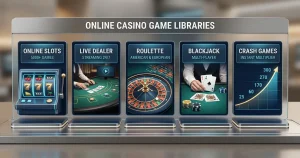
The guide explains UK licensing, crash-game house advantage, bonus terms, demos and the limits of what random outcomes reveal.

If you are looking for an online crash casino, the first distinction to understand is not the game catalogue but the operator’s regulatory position. A specialist review describes the 2026 market as having two parallel parts: casinos operating within the UK Gambling Commission’s framework and offshore platforms operating outside it. That description is useful as a broad way to understand the choices a player may encounter, but the two parts do not have the same status under British gambling law.
A casino serving customers in England, Scotland or Wales and offering real-money gambling must hold a licence from the UK Gambling Commission (UKGC). The requirement applies to the operator, not just to the company’s location: a business based overseas must still be licensed if it is selling remote gambling into the British market. The Gambling (Licensing and Advertising) Act 2014 established this licensing requirement for operators taking bets from British residents. A website’s overseas address, branding or choice of games does not remove that obligation.
When choosing a crash casino game in the UK, payout timing can be one practical factor to consider. Use the listed withdrawal speed as a reference while deciding what suits you.
Chanze
Chanze lists a payout speed of 1–3 business days, giving you a stated timeframe to consider.
Dieselwin
Dieselwin lists payouts as taking 1–3 business days. You can use that timeframe as one point of reference.
WinBeast
WinBeast gives a payout speed of 1–3 business days, which provides you with a stated indication of withdrawal timing.
Jetsetspins
Jetsetspins lists a payout speed of 1–3 business days. That gives you a timeframe to bear in mind.
NightWin
NightWin’s listed payout speed is 1–3 business days, offering you a clear reference for withdrawal timing.
Britsino
Britsino lists payouts at 1–3 business days. You can factor this stated timeframe into your choice.
Amunbet
Amunbet gives a payout speed of 1–3 business days, a useful timing detail for you to consider.
EvoSpin
EvoSpin lists a payout speed of 1–3 business days, giving you a stated withdrawal timeframe.
Zombillion
Zombillion lists payouts as taking 1–3 business days. You can keep this timeframe in mind when considering the operator.
Revery Play
Revery Play lists a payout speed of 1–3 business days, giving you a reference for expected withdrawal timing.
This matters when you come across a crash casino online that accepts registrations from UK players but does not hold a UKGC licence. Offshore casinos may be accessible to people in Britain, yet they operate outside the UKGC system. Being able to open a site, create an account or see a game is not the same as the operator being authorised to offer gambling here. Access and regulatory status are separate questions.
The practical distinction is therefore between a UKGC-licensed operator and a platform outside that framework—not between a British-looking website and a foreign-looking one. A company can be based abroad and still need the relevant UK licence to serve customers in Great Britain. Conversely, a platform may accept UK players while lacking that licence. Its willingness to take registrations does not make it a licensed UK casino.
The word “offshore” describes the platform’s position outside the UKGC regulatory system; it does not mean that the platform has no licence anywhere. Some offshore operators may hold a licence from another jurisdiction, but that is not a substitute for a UKGC licence when the operator is offering real-money gambling to customers in England, Scotland or Wales. For a player comparing an online casino crash game, the relevant question is whether the operator is licensed for the British market, rather than whether it displays a foreign licence.
This also explains why a search for crash games can lead to sites with very different regulatory standing. The same general type of game may appear on a UKGC-licensed casino and on a non GamStop site operating outside the UKGC space. Their presence in a search or their acceptance of UK registrations does not place them under the same rules. When the site is outside the UKGC system, it is not a UKGC-licensed casino, even if its pages are available to British visitors.
For a UKGC-licensed casino, the licence is the basis on which it can legally offer online gambling to customers in the relevant part of Great Britain. It is not simply a quality label or a claim about where the company is incorporated. It connects the operator to the UK regulatory framework. That is why a casino online crash offering should be understood in the context of who operates it and whether that operator holds the required UKGC licence—not just the title of the game or the site’s presentation.
An offshore platform that accepts UK players is a different case. It operates beyond that UKGC framework, so UKGC licensing should not be assumed from the fact that the site is reachable or that it accepts a British customer. Nor does an overseas licence turn the operator into a UKGC licensee. Those distinctions are particularly important when a platform presents itself as an alternative to a regulated casino: the word “alternative” does not tell you what legal status it has in Britain.
For your own comparison, keep the questions narrow. Is the operator offering real-money gambling to customers in England, Scotland or Wales? If so, the relevant requirement is a UKGC licence. Is the site instead an offshore platform accepting UK players without one? Then it sits outside the UKGC system, regardless of whether you can access its crash online casino game. These are different regulatory positions, not interchangeable routes into the same market.
In short, an online casino crash game can be found in more than one kind of setting, but availability alone does not establish that the operator is authorised to serve the British market. The 2014 licensing framework makes the operator’s status central: businesses taking bets from British residents must hold the required licence, and operators offering real-money gambling in England, Scotland and Wales must be licensed by the UKGC. Keep that distinction in view when deciding where to play.
A crash game offered for cash stakes belongs to the broader category of casino gambling. The format may look different from a familiar casino game, but the central point is the same: you stake money on possible outcomes, and the casino game is structured to give the operator an advantage over time. That does not prevent a player from winning in a particular round or session. It does shape what repeated play means.
The distinction between a short-term result and a long-term pattern matters. A player can come away ahead after a brief run of play, while the casino’s advantage remains in place across repeated wagers. Neither outcome tells you exactly what will happen next. A win is not proof that future rounds are favourable, just as a loss does not mean a win is due.
A house advantage is the underlying edge built into casino gambling. It describes the relationship between the game’s rules and the possible results over continued play: the casino is expected to benefit in the long run, while individual players may still gain in the short term.
This is not a forecast for your next round. It does not mean that every player loses, or that a casino can determine the result of an individual wager. It means that the game’s overall structure favours the operator when play is repeated. A winning streak can happen within that structure; it does not remove the advantage.
It is also useful to separate an individual result from a run of results. A player may win early, lose later, or stop after either outcome. Those events describe one person’s experience, not a change in the underlying balance between the game and the house. A good result does not make the next wager safer, and a poor result does not make a recovery more likely.
The name “crash” can make the format seem unlike other casino play, but the label alone does not change the basic financial relationship. When you stake cash on a possible game outcome, you are taking part in casino gambling. The possibility of a short-term gain is real; so is the casino’s long-term advantage.
That is the context to keep in mind when considering a crash casino game in the UK. Focus less on the sense of momentum that a game may create and more on what each stake means to you. A run of favourable results can feel like evidence that play is going well, but it does not establish what the next outcome will be. Equally, a run of losses does not create an entitlement to win them back.
The same caution applies to decisions made during play. Changing your stake after a win or a loss cannot, by itself, change the game’s underlying advantage. If you continue because you feel a result is “due”, you are treating past outcomes as a promise about future ones. They are not. Each decision to wager still carries financial risk, even when the previous result has made the next one feel more predictable.
A session can end with a profit, and that profit can matter to the person who receives it. But one positive result does not show that a game offers an advantage to players overall. The casino’s long-term edge and a player’s short-term win can coexist.
It can help to keep the two ideas separate: what happened to you in a particular spell of play, and how the game is structured over time. The first is a personal result. The second is why repeated casino play favours the house. Confusing them can encourage you to treat a temporary gain as a reliable way to make money, or to keep staking in an attempt to turn a loss around.
A crash game’s pace or presentation may make decisions feel immediate. That does not make the long-term relationship between player and casino disappear. The key point is not that a particular outcome can be known in advance; it is that the casino game offers possible short-term gains within a structure that gives the operator a predictable advantage over time.
For you, that means approaching crash casinos as gambling rather than as a dependable source of income. A win can happen, but it cannot be used to establish that future play will be profitable. The house advantage is a feature of the wider casino context, not a prediction of exactly how any one round or session will end.
Crash-style games are one part of a wider casino catalogue, but their label does not tell you whether they work like a slot, a table game or another format. The useful distinction is how a game is presented and who takes part, rather than whether a casino groups it under a particular heading. A site offering crash games may place them beside slots or other online titles, but that does not make the formats interchangeable.
Gambling machines are generally designed for one player at a time and do not need a casino employee to run each play. That makes machine-style gaming distinct from a staffed table, where a croupier or dealer conducts the game. Online, the presentation may look different from a physical machine, so a category label alone is not enough to establish how a particular title is organised.
Typically solitary activities designed for one player at a time without the need for a casino employee to run the play.
Games where players compete against the casino and a croupier or dealer conducts the play.
A separate format where the player predicts whether the next card will be high, low, or the same.
People sometimes use “crash slots” or “slots with a crash feature” as if the terms describe one settled category. They may instead be referring broadly to games found in the same online lobby. If you are comparing crash-style games with slots, look at the game’s own rules and interface rather than assuming that a shared menu or search label means they operate in the same way. The word “slot” may describe the section of a casino where you found a title, not necessarily its format.
That distinction matters when you are deciding what kind of game you want to play. A machine-style game is typically a solitary activity, while other casino formats can involve a dealer or interaction with other players. The name of a category cannot tell you what decisions a game asks you to make or what its rules are; those details belong to the specific game.
Table games are organised differently. Players compete against the casino, not against one another, and a croupier or dealer usually conducts the play. That gives the table a visible human role that is not required for gambling machines. Online versions can present a table format on screen, but the underlying distinction remains the role of the dealer and the relationship between players and the casino.
Hi-lo is a separate format worth recognising when browsing a casino catalogue. A player predicts whether the next card will be high, low or the same. It is not simply another name for a crash-style game or a slot; the card prediction is the defining choice described by the format.
These broad categories can help you make sense of a lobby, but they are not a substitute for reading the game rules. A site may put different kinds of titles close together, and familiar labels can blur the differences. Before playing, check what the game actually asks you to do and whether it is a machine-style, table or card-based experience. That is a more reliable way to compare formats than treating every fast-paced or visually similar title as the same kind of casino game.
A casino bonus can look straightforward until you reach the conditions attached to it. Before opting in, check what you must do to qualify, which games count towards the wagering requirement, and what happens if you do not meet the terms. The headline amount alone does not tell you how much play is required or whether the offer suits the way you intend to play.
Since 19 January 2026, gambling incentives in the UK cannot require more than 10x wagering of the bonus funds. This is a cap, not a target: an operator cannot set a higher wagering requirement for an incentive. If you are reading older terms or an archived offer, do not assume that they describe the rules in force now. Check the conditions presented for the offer before you accept it.
Bonus Wagering Calculation
Identify the bonus
Determine the amount of bonus funds received, for example, £20.
Apply the multiplier
Multiply the bonus funds by the wagering requirement, such as the 10x cap (£20 × 10).
Calculate total stakes
Determine the total amount that must be wagered, which in this case is £200.
The calculation is based on the bonus funds, not on how generous the offer sounds. A £20 bonus with a 10x wagering requirement means £200 in total stakes before the requirement is met. That figure refers to the amount wagered in all, not to a sum you are expected to lose. Meeting a wagering requirement does not guarantee a win or mean that the bonus becomes withdrawable immediately; read the rest of the terms to understand what the operator says happens next.
Find the full bonus terms before you opt in, rather than relying on a short banner or summary. The wording should make the offer’s conditions clear and fair. In particular, check how the operator defines the bonus funds, what counts towards wagering, and whether any games or forms of play are excluded. If the terms do not answer a question that matters to you, ask the operator for clarification before accepting.
For a crash game offer, do not assume that a casino-wide promotion automatically applies to every game. The terms may define which games contribute to wagering, and a game’s presence in the casino does not by itself establish that it qualifies. The same caution applies if an offer mentions slots or other casino games alongside crash-style play: check the actual conditions rather than inferring eligibility from the wording of the promotion.
Also look for any conditions that apply after the wagering requirement. The cap limits the wagering multiple; it does not remove the need to understand the rest of the offer. Make sure you can identify what you need to do, which funds the requirement concerns, and what the terms say about claiming or using the reward. If a key condition is unclear, you can decline the offer rather than trying to work it out after opting in.
An incentive cannot require you to gamble across different product types, such as casino games and sports betting, to unlock the same reward. If the offer makes a casino bonus conditional on placing bets, or ties a betting reward to casino play, that mixed-product requirement is not permitted. This matters when an operator presents several products together: the presence of both on the same site does not make them interchangeable parts of one qualifying task.
Read the offer as a whole, including any linked terms. A short description may not show every condition, while the full terms can explain what action is required. If the reward appears to depend on activity across casino and betting products, do not opt in on the assumption that the condition is harmless or optional. The rule is about the incentive itself, not simply how the operator groups its products on a page.
Promotions are for people aged 18 or over who are UK residents. Operators must verify a customer’s age before allowing a deposit into a gambling account, so do not treat a bonus advertisement as confirmation that you can claim it. Review the eligibility conditions and provide accurate account details where requested. If you are not eligible, accepting or attempting to use the offer is not a way around the requirement.
You should also distinguish an offer’s stated value from money you can use without conditions. Bonus funds are subject to the terms attached to the incentive, including the wagering requirement. Take time to work through those conditions before opting in, especially if the offer is presented as a way to try a particular crash game. A promotion does not change the game or remove the financial terms attached to the bonus.
If the conditions are clear, within the wagering cap and do not combine casino and betting activity, you can decide whether the offer is worth accepting. If they are difficult to follow, or the operator’s description conflicts with its detailed terms, leave the promotion unclaimed until you have a clear answer.
A specialist review of offshore casinos that accept UK players reports that some platforms list Bitcoin, Ethereum and Litecoin alongside conventional cards and e-wallets. That is an account of options reported on particular platforms, not a promise that every casino accepts all of them. Payment methods can differ between operators, and the cashier is the place to confirm what is available before you choose how to fund an account.
Crypto may appeal if you already hold digital currency, but it adds steps to consider. Check which coin the platform accepts and whether the payment instructions specify a particular network. A mistaken choice of asset or network can create problems with a transfer, so do not rely on assumptions based on another service. Read the casino’s deposit and withdrawal terms as well: a payment method shown for deposits may not necessarily be available for withdrawals.
Look for clear information about any processing charges, conversion rates, minimum transaction amounts and withdrawal conditions. If the terms are difficult to find or do not explain how a payment is handled, pause before transferring funds. With cryptocurrency, the amount you send and the value shown by the casino may not remain equivalent over time. Consider that uncertainty when deciding whether to use crypto at all.
Conventional options may be more familiar. The same specialist review reports cards and e-wallets among the methods some alternative platforms accept, but availability varies. Do not assume a card option is permitted simply because it appears in an offshore casino’s cashier. UKGC-licensed casinos cannot accept credit cards for gambling, and a payment route should not be treated as a way around that restriction.
Before sending money, check the recipient details carefully and keep a record of the transaction and the casino’s payment terms. Confirm that you understand how to request a withdrawal using the method you intend to use, and whether the platform requires any steps before releasing funds. If the available information is unclear, choosing not to deposit is a reasonable option.
Crypto is only one possible payment route for crash games; it does not make a casino’s other terms easier to assess. Make the payment decision separately from the decision to play, and do not send more than you can afford to lose.
A crash game may be described as a random-number game because selected numbers are generated by a computer or other gaming equipment. That tells you something about how outcomes are produced. It does not, on its own, tell you whether a particular game has been independently checked, whether its results can be verified by players, or whether a claim of fairness has been demonstrated.
This distinction matters when you compare crash game providers. A provider’s name, a casino’s description of a game, or a label such as “provably fair” is not the same thing as evidence explaining how an outcome can be checked. Those phrases may point to a feature or a claim, but they do not explain its scope. Does it cover the game’s outcome generation, the way results are recorded, or something else? What information can you inspect yourself? A clear answer should describe the process rather than rely on a reassuring label.
The term “provably fair” is often used for crash games, but it should not be treated as a general guarantee. If a casino presents a provably fair crash game, look for an explanation of what is being proved and how a player can verify it. If the explanation is vague, or only repeats the phrase without describing a check, you cannot infer much from the label. The same applies when an operator lists a provider: the provider’s identity alone does not establish what verification is available for a particular title.
It is also useful to separate randomness from transparency. A game can use numbers generated by a computer or gaming equipment, while the information shown to players may still be too limited for them to confirm how a result was reached. Conversely, a description of a checking method needs to say what it checks; the word “random” does not fill in those details.
When reading about a crash casino game provider, focus on precise statements rather than broad assurances. Find out whether the explanation relates to the specific game you intend to play, and whether it tells you what data or steps are involved in checking an outcome. Do not assume that every game from a provider uses the same approach, or that every casino explains a feature in the same way.
The careful conclusion is narrow: random-number games use numbers generated by a computer or other gaming equipment. That fact alone neither proves nor disproves a wider claim about fairness. Treat “provably fair” as a claim to understand, not a substitute for understanding the process.
“Free” can describe different things on a casino site, so it helps to look at what is actually being offered. A no-deposit bonus is a casino bonus you can receive without spending money. The name refers to how you receive the bonus; it does not, by itself, mean that a crash game is available to play for free.
A no-deposit bonus is an incentive received without spending money, whereas free play refers to a version of the game available to try without real-money stakes.
That distinction matters if you are looking for a way to try a crash casino game without paying. A page may use phrases such as “free crash games” or “play free”, but those words alone do not tell you whether it means a bonus, a separate free-play version, or something else. Read the description of the offer rather than treating every use of “free” as the same promise.
A no-deposit offer is still a bonus. It is not simply another name for free access to a game, and receiving one does not establish that a particular crash title can be played without stakes. Equally, seeing a free-play claim does not establish that you are being given a no-deposit bonus. The two labels describe different things.
If you are considering an offer, check what the casino says you will receive and how it is presented in your account. Is it a bonus, or is the claim about access to a game? That basic distinction can prevent confusion before you make a decision. Do not assume that a phrase such as “free crash casino” explains the offer fully, or that it says anything about whether the game is fair. Fairness is a separate question from whether a bonus costs money to receive.
For a straightforward reading, treat “no deposit” as a statement about the bonus: you can receive it without spending money. Treat claims about playing a crash game for free as separate, and look for a clear description of what that access involves. The wording should make clear what is being offered, rather than relying on the word “free” to cover several meanings.
A crash casino demo, when a particular game offers one, can let you explore how that game is presented without placing a real-money stake. You may be able to see its layout and learn how its controls are arranged. That can help you decide whether the format is clear to you before you choose to play. It does not establish what would happen in a real-money session.
Availability is not universal. Casino games can be offered through online casinos where this is permitted by law, but that does not mean every crash game has a demo version. Check the game itself and the casino’s information rather than assuming that a demo will be available. A page describing a game may also be different from an interactive version you can try.
Treat a demo as a way to become familiar with the display, not as evidence about fairness or future results. What you see while using it cannot show that real-money play will follow the same sequence, nor can a short session establish how the game will behave over time. A run that appears favourable or unfavourable in a demo is not a forecast.
The distinction matters if you are considering a crash slot demo or another free-to-try version. The word “demo” describes the mode of access; it does not, by itself, tell you how the game is operated or what protections apply. Nor does access to a demo prove that the casino offers the same game for real money.
If a demo is available, use it to check whether you understand the on-screen information and the steps involved in play. If anything is unclear, pause rather than treating familiarity with the interface as a reason to wager. The useful conclusion is limited: you have seen how that version is presented. It is not proof of future outcomes, fairness, or suitability for real-money gambling.
A casino game is not simply an animation to watch: when you play for money, you are gambling cash or chips on possible random outcomes. That is the basic point to keep in view before opening a crash-style game. The screen may make the action feel immediate, but a wager still involves putting something of value at stake.
If you are learning how to play a crash casino game, begin by finding out what the game asks you to wager and what outcome your stake depends on. Do not assume that a familiar-looking display explains the rules. Read the game’s instructions and make sure you understand what counts as an outcome, when a wager is placed and what determines whether it returns anything. If any part is unclear, pause rather than relying on a guess.
It can help to separate the game’s presentation from the decision you are making. A rising display, a changing multiplier or a quick sequence of events may draw your attention, but those features do not change the underlying exchange: you stake cash or chips on an outcome that may or may not go your way. Knowing what is happening on screen is not the same as knowing what you are risking.
Before you play crash casino, decide whether you are comfortable making a wager at all. Keep the choice deliberate rather than letting the pace of a game make it for you. You do not need to start just because a game is available, and understanding its instructions does not make an outcome certain. The useful starting point is simple: identify the stake, understand the possible outcome, and only proceed if you are clear about the bet you are placing.
When you play a crash game for real money, each stake has a financial consequence. A favourable result can produce a short-term gain, but that possibility does not make the outcome dependable or turn a run of wins into a reliable source of income.
The broader pattern matters more than any single session. Casino games are designed to give the casino a predictable advantage over the long term, while still allowing players to win in the short term. That means a real-money crash game can feel positive for a while without changing the underlying balance of risk. Short-term results do not remove the casino’s longer-term edge.
Before you stake money, decide what you can afford to lose and treat that amount as spending, not as money you expect to recover. A win should not be assumed in advance, and a loss is not a reason to keep playing until you get back to even. Chasing a previous result can expose more money to the same basic risk.
The phrase “real-money crash casino” can make the focus sound like the potential payout. For your decision, the more useful focus is the amount you are putting at risk and whether you are comfortable losing it. If the money is needed for bills, borrowing, or another commitment, it is not a safe amount to stake.
Keep the choice separate from hopes about what might happen next. A gain is possible, but so is losing the money you wager; neither a recent win nor a recent loss guarantees what follows. If playing begins to affect your finances or feels difficult to stop, step away and seek support rather than trying to solve the problem with another stake.