E-wallet availability can differ between deposits and withdrawals, so check cashier support, transaction costs and account-detail consistency.
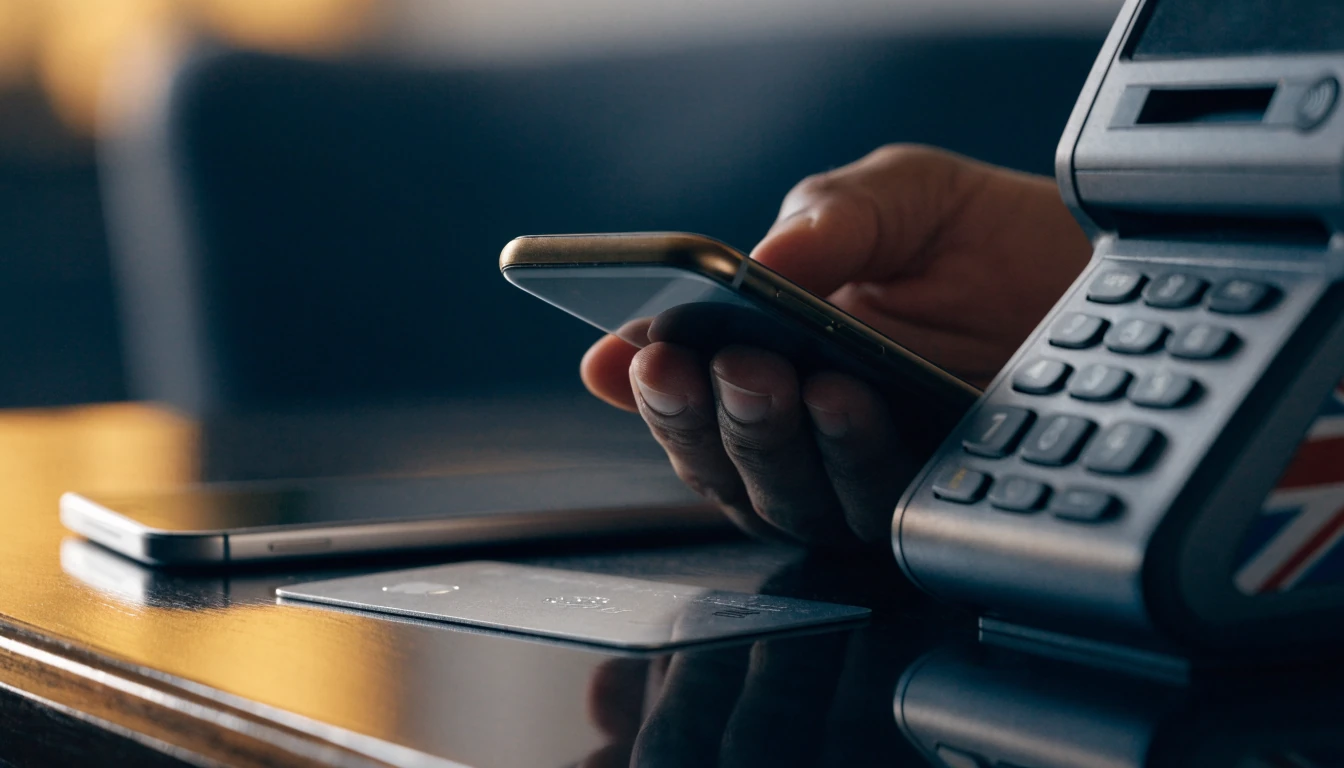
An e-wallet sits between your bank or card and a casino account. Rather than entering card details for each payment, you choose the wallet at the cashier and authorise the transaction through that service. That can make it a distinct option from paying directly by debit card or using a bank-connected payment route. It does not, by itself, tell you whether the casino will accept the wallet for both deposits and withdrawals.
For UK players, e-wallets are one part of a wider payment picture. Debit cards remain a familiar route: casinos commonly accept Visa and Mastercard debit cards. Open banking and bank transfers are other ways to move money from a bank account. The difference is not simply the name displayed in the cashier. Each route handles the payment differently, and the way money arrives in your casino balance may not match the way a withdrawal reaches you.
That distinction matters when you compare payment options. A deposit is money going into your gambling account; a withdrawal is money being paid out of it. You may see a payment marked as successful on deposit without that telling you how quickly a later payout will be processed. A specialist review reports that a card deposit can be instant while the associated payout takes several business days. Treat that as a possible difference between the two stages, not a promise about every casino or card.
When choosing a UK casino that accepts e-wallets, check the payment methods and withdrawal terms that matter to you. The available information here gives a stated payout speed for each listed operator.
Chanze
Chanze has a stated payout speed of 1–3 business days. Check whether its e-wallet options suit you.
Dieselwin
Dieselwin has a stated payout speed of 1–3 business days. Check whether its e-wallet options suit you.
WinBeast
WinBeast has a stated payout speed of 1–3 business days. Check whether its e-wallet options suit you.
Jetsetspins
Jetsetspins has a stated payout speed of 1–3 business days. Check whether its e-wallet options suit you.
NightWin
NightWin has a stated payout speed of 1–3 business days. Check whether its e-wallet options suit you.
Britsino
Britsino has a stated payout speed of 1–3 business days. Check whether its e-wallet options suit you.
Amunbet
Amunbet has a stated payout speed of 1–3 business days. Check whether its e-wallet options suit you.
EvoSpin
EvoSpin has a stated payout speed of 1–3 business days. Check whether its e-wallet options suit you.
Zombillion
Zombillion has a stated payout speed of 1–3 business days. Check whether its e-wallet options suit you.
Revery Play
Revery Play has a stated payout speed of 1–3 business days. Check whether its e-wallet options suit you.
Some specialist reviews also describe open banking and bank transfers as routes that can allow instant deposits and fast withdrawals at many sites. Availability and processing depend on the casino and the particular payment arrangement, so those descriptions should not be read as a guarantee for your account. An e-wallet has the same broad limitation: seeing a wallet named as a deposit option does not establish that it can also receive a payout there.
This is why the phrase “casino that accepts e-wallets” needs a little care. It can mean that a wallet is available for deposits, but that may not settle how withdrawals work. The cashier’s options and the casino’s terms determine what is possible for your account. An e-wallet online casino in the UK is therefore not defined only by a logo on a payments page; the relevant question is how that method is enabled for each stage of your transaction.
There is also an important boundary around card payments. UK-licensed casinos cannot accept credit-card payments for gambling. Debit cards are a separate payment method, and the fact that a casino accepts a debit card does not mean credit cards are available. Wallet payments must not be used where the wallet allows credit-card funds to be used for gambling. The method’s label alone is not enough to establish that a payment is suitable.
For a practical comparison, think about where the payment begins and where you expect it to end. A debit-card payment is tied to the card route; a bank transfer or open banking payment connects with your bank; an e-wallet uses the wallet account as an intermediary. These descriptions help you understand the choice, but they do not promise a particular payout route or speed. The cashier is the useful point of reference for the options offered to you.
When you look at online casinos with e-wallets, separate the convenience of making a deposit from the question of receiving money later. A wallet may feel straightforward at the point of payment, yet the casino may handle a withdrawal under different conditions or offer another route. Similarly, an instant deposit through a bank-linked method does not mean the casino has completed its own payout processing as soon as you request a withdrawal.
The most useful starting point is to treat e-wallets, debit cards, open banking and bank transfers as different payment routes rather than interchangeable buttons. Each can serve a different preference, but the route that looks simplest for paying in may not be the one that works best for receiving money. Confirming what the casino actually offers for both sides of the transaction helps you avoid assuming that deposit support automatically means payout support.
A payment method is only useful if it works for your account and for the transaction you intend to make. A name on a casino’s general payments page is not enough to confirm that it is available to you now. Treat the cashier as the practical check: sign in, review the methods shown there and read any conditions attached to the option before committing to it.
A specialist review may list Visa and Mastercard among a site’s payment options, but that does not establish that every card product is eligible or that the method is currently available to UK customers. Check what the casino’s own cashier offers. If a method is absent, do not assume that contacting support will make it available; ask first rather than trying a different route without understanding the rules.
Separate the ability to make a deposit from the ability to receive a withdrawal. A payment option shown for deposits should not be treated as proof that it can also be used for payouts. Look for clear information about both functions, and ask customer support if the cashier or payment terms leave the point unclear. This matters before you choose a method, because you may otherwise discover that it does not fit your plans only after money is in the account.
Also check whether the method is offered to your account, rather than relying on a general description of what a casino accepts. Availability can depend on the option presented during your own sign-in and payment process. A clear answer before you pay is more useful than a broad claim on a promotional page.
Think about the account and payment route you can actually use, not just the method that sounds familiar. You may have access to several options, but the right one is the one whose conditions you understand and can meet. Read the casino’s payment information and the provider’s terms, including any charges that could apply. A specialist review notes that there is no single payment method with the lowest cost in every case: casino charges, provider fees, exchange-rate spreads and network costs can all affect what you pay. Compare the actual terms for the transaction you plan to make rather than choosing on the basis of a general label such as “free”.
Your payment choice must also fit UK gambling rules. Credit-card payments for gambling are banned at UK-licensed casinos, and remote gambling operators cannot accept credit-card funding routed through a money service business. They also cannot accept wallet payments where the wallet permits credit-card funds to be used for gambling. If you are unsure how a wallet is funded or whether its terms allow the intended use, check with the provider and casino before proceeding.
A casino’s options may also differ from what you expect based on another site or an older review. Recheck the cashier when you are ready to transact, and do not treat an old list as a promise of current access. This is especially important if you have already settled on a method: confirm that it appears as an available choice and that its stated conditions suit your account.
A sensible comparison does not need a complicated ranking. Confirm that the method is currently offered, establish whether it supports the transaction you need, and understand the relevant terms before selecting it. If one of those points is unclear, pause and ask the casino or payment provider for an answer you can rely on. That small check can prevent an avoidable mismatch between the payment option you choose and the way you need to use your account.
Finally, consider whether the option is manageable for you beyond the initial payment. The method should be one you can use within its rules, with costs and conditions you have checked, rather than one selected solely because it appears on a list. The cashier and the applicable terms—not a general recommendation—are the basis for deciding whether it is suitable.
A payment method that works for a deposit does not automatically determine how quickly a withdrawal reaches you. The two transactions travel in different directions and can involve different checks. When you pay in through an e-wallet, the casino receives an authorised deposit. When you request a payout, the casino may first need to review the request, confirm your account details and decide which payment route it can use under its controls.
That distinction matters when comparing UK casinos that accept e-wallet deposits. A deposit may appear in your casino balance promptly, while a withdrawal remains pending during the operator’s internal review. The time shown for a payment provider does not necessarily cover that review stage. It may describe only the transfer after the casino has approved and released the funds.
A specialist casino review describes withdrawal processing as including the operator’s approval, with a first payout potentially taking longer while verification is completed. Treat that as a description of the process, not a guaranteed timetable for your account. The casino’s own cashier and withdrawal terms are the relevant places to check how it handles requests. If KYC is incomplete, or if the operator needs more information to confirm the account, approval can take longer than the payment transfer itself.
After approval, the casino still has to send the funds through a route it is permitted to use. You might expect to withdraw directly to the e-wallet used for your deposit, but the available payout options depend on the operator’s rules and the payment route. The method you select for paying in is therefore not a promise that the same method will process a withdrawal at the same speed.
UK anti-money laundering requirements generally mean that a payout should be returned to its original payment source. Returning funds along that route is also a common anti-fraud control. It helps the operator keep the flow of money connected to the customer and payment source involved in the account, rather than sending it to an unrelated destination.
This is why a casino may direct a withdrawal back to the method used to fund the account, even when another option appears in the cashier. In some cases, a payment provider or transaction arrangement may not allow the full amount to return through the original route. The casino may then explain an alternative. That does not necessarily mean the payout can be redirected without checks: an alternative route can require additional verification before the operator releases the funds.
Keep the stages separate when you assess a payment option. First, the deposit is authorised and credited. Later, a withdrawal request is submitted. The casino reviews it, completes any outstanding checks and releases the approved funds through an eligible route. Finally, the payment provider processes the transfer to your account. A delay at any one of those stages can affect the overall wait, even if the original deposit was quick.
If your payout is still pending, check whether the casino is reviewing the request or whether it has already released it to the payment provider. Those are different situations and may call for different follow-up. The withdrawal status or a response from the casino can clarify which stage the payment has reached. Avoid assuming that a pending request means the e-wallet itself is holding the funds.
Before depositing, read the casino’s withdrawal information as well as the deposit details. Look for how it handles approval, verification and return of funds to the original source. This gives you a more realistic picture of the route your money may take than a deposit speed alone, and helps prevent an unexpected payout route from becoming a surprise after you request a withdrawal.
UK casino payment menus can include several different routes: debit cards, e-wallets, bank transfers and open banking. Some casino payment pages also list cryptocurrencies, but a method appearing in a review or on a general information page does not confirm that it is available to you. The cashier in your account is the practical place to check which options the operator currently offers.
Debit cards are a familiar route. Visa and Mastercard are named on casino payment pages, though that does not mean every card product or card transaction will be accepted. Availability can depend on the operator’s current setup and your account. Check the cashier rather than assuming that a logo on a separate page guarantees that your card will work.
E-wallets are another route to look for if you prefer to pay through a wallet account rather than enter card details each time. The available names vary between casinos, so there is no single wallet menu shared across the market. Look at the options shown after signing in, and read the payment terms for the specific method before choosing it. A general description of a casino’s payment range may not reflect what is enabled for your account.
Bank transfers and open banking may also appear in a cashier. A specialist review describes these routes as capable of providing instant deposits and fast withdrawals at many sites. Treat that as a reported possibility, not a promise about a particular casino: the operator’s own cashier and payment terms are the relevant place to confirm what is offered. The route may be presented as a direct bank connection or as a transfer, and the labels can differ.
There is an important boundary around cards. Credit-card payments for gambling have been banned by the UK regulator since 14 April 2020, and the restriction has not been relaxed. UK-licensed casinos cannot accept credit cards for gambling. This also rules out credit-card funding routed through a money service business, and operators cannot accept wallet payments where the wallet allows credit-card funds to be used for gambling. Do not try to work around the restriction by moving credit-card funds through another payment route.
Before your first deposit, expect the operator to prompt you to set a financial limit. Remote operators must also make account-level limit controls accessible, so you can find and manage them in your account. Take a moment to set a limit that reflects what you can afford, rather than treating the prompt as a box to clear quickly. Payment availability and spending controls are separate matters: a method appearing in the cashier does not change the need to consider your budget.
When comparing casinos that accept e-wallets in the UK, distinguish between a payment method being mentioned and being selectable in your own cashier. The same applies to cards, bank transfers and open banking. Check the options shown to you before committing to a route, and avoid relying on an old list as a live account-specific menu. That simple check can prevent you from planning around a method the casino does not currently make available.
The amount you can add to a casino balance depends on the payment option selected and the rules attached to your account. E-wallets may feel straightforward at the point of payment, but they do not all share the same minimum or maximum. Treat the figures shown in the cashier as specific to that transaction, rather than assuming that a limit quoted elsewhere applies to you.
A specialist review gives a typical starting deposit range of £10–£20, depending on the payment method. That is a guide, not a promise that every e-wallet will accept a deposit at the lower end, or that every casino will set the same threshold. The minimum can be shown after you choose the wallet in the cashier, so check it before confirming the payment. If the amount you intend to deposit is below the displayed minimum, the transaction may not proceed.
The maximum is a separate check. A specialist review notes that deposit ceilings can differ by payment method and account status, and may be set per transaction, per day or per month. That means a wallet’s own allowance is not necessarily the only limit in play: the casino may also apply its own cap. If you have already deposited during the relevant period, the remaining amount available may be lower than the full stated maximum.
Before authorising a payment, read the amount and currency shown on the casino page and in the wallet confirmation. Make sure the amount is the one you intended and that you understand whether the casino is stating a minimum, a transaction cap or a broader account limit. Do not assume that a limit displayed for one payment route also applies to another. If the cashier’s terms are unclear, pause and ask the operator to explain them before sending money.
A rejected or incomplete payment does not necessarily mean that the wallet itself is unavailable. The amount may fall outside a transaction threshold, or an account-level restriction may apply. Check the message shown by the casino and the payment provider rather than repeatedly submitting the same transaction. Repeated attempts can make it harder to understand which limit or requirement is affecting the payment.
Checking Deposit Limits
Select the wallet
Choose your preferred e-wallet within the casino cashier to see its specific limits.
Verify the minimum
Check if your intended deposit amount meets the displayed minimum threshold for that method.
Review the maximum
Confirm the transaction ceiling, noting that it may be limited by both the wallet provider and the casino.
Set your own spending boundary before depositing, and use the account controls provided by the casino to keep it visible. A payment method’s maximum is a technical ceiling, not a suggested amount to spend. The useful figure is the one that fits your budget and is accepted under the limits shown for your account.
An e-wallet appearing in a casino’s cashier does not, by itself, tell you whether it can be used for both sides of a transaction. Check the terms attached to the specific method before depositing: it may be available for deposits but not for withdrawals, or the casino may offer different options for paying in and cashing out. A method that works only one way may leave you needing another route later.
Look for separate information on deposits and withdrawals in the cashier or payment terms. If the details are unclear, ask customer support to confirm whether the same e-wallet can handle both transactions for your account. Do this before sending money, rather than assuming that a familiar provider name guarantees full support. The method needs to be available to you, not simply mentioned somewhere on the site.
Where the casino supports both directions, using one named account consistently is often the cleanest arrangement. It keeps the payment route straightforward and reduces the chance that you discover a compatibility issue only when you want to withdraw. If you are considering switching methods after depositing, check first whether the casino allows that route and what it requires.
Currency is another compatibility check, not a detail to leave until checkout. A specialist review says that GBP is supported, but that does not establish the currency setting on every casino account. Confirm the account currency before your first transaction and check that it matches the currency you intend to use. If the account and payment are handled in different currencies, conversion may occur.
Do not rely only on a currency symbol shown beside a deposit amount. Check the account settings and the cashier’s confirmation screen, and make sure you understand which currency will be used for the transaction. If the displayed currency is not clear, pause and ask the casino before proceeding. This can help you avoid an unexpected conversion and make it easier to compare the amount shown in your account with the amount you expect to deposit.
Before paying, confirm three things together: the e-wallet is available to your account, it supports both deposits and withdrawals, and the account currency is suitable. These checks are more useful than choosing a method based only on its name or presence in a general payments list. If any part of the route is uncertain, resolve it before you make the first deposit.
Skrill and Neteller are familiar names in casino payment menus, but their presence is not universal. A specialist casino review reports that some sites accept them and that promotions often exclude deposits made through these wallets. Treat that as a prompt to read the offer’s terms, not as a rule that applies to every casino or promotion. If a bonus matters to you, check whether the specific wallet payment qualifies before confirming the deposit.
Jeton is less widely encountered. A specialist casino review describes it as still available at a handful of UK online casinos in 2026. That does not mean it will appear in every cashier, or that a casino showing Jeton will support it for every account. Look for the method in the payment area while signed in, and confirm its current status with the operator if the display is unclear.
The Payz name can cause a different kind of confusion. EcoPayz rebranded to Payz in 2022, so older references to EcoPayz may point to the service now presented under the Payz name. When comparing instructions or saved payment details, check whether they refer to the same provider rather than assuming that the older label identifies a separate wallet.
These names are useful starting points when you are looking through e-wallet options, not a promise that a particular casino accepts them. A payment method can also be shown differently in an operator’s cashier than in an older review or guide. Check the casino’s own current payment information before relying on a name you have seen elsewhere. For Skrill, Neteller and Jeton, make sure you are looking at the exact option available to your account; for Payz, account for the change from the EcoPayz name when reading older material.
When you use an e-wallet at a UK casino, the account details and payment account should point to the same person. If the casino account is in your name but the wallet belongs to someone else, the mismatch can raise basic questions about who owns the funds. Keeping those details aligned reduces the chance of avoidable friction during a transaction.
Before making a payment, check that your casino account information is accurate and that you have signed in to your own e-wallet. A shared device does not change who owns the payment account: the important point is that the person named on the casino account is also the customer using the wallet. This is a straightforward way to avoid creating an ownership issue that may need to be clarified later.
The same principle applies when funds are paid out. Casinos commonly use closed-loop rules, returning money to the source used to pay in as part of anti-fraud and anti-money-laundering controls. If you ask for a different route, the casino may need further verification before it can process the request. That can add steps, even where there is a reasonable explanation for using another account.
For e-wallet payment casinos in the UK, consistency is therefore more than an administrative detail. It helps make clear that the deposit came from your own account and that the casino account belongs to you. If you need to change personal details or use a different payment route, contact the casino before starting the transaction and follow its instructions. Do not try to work around a mismatch by entering someone else’s payment details.
These checks are not a guarantee that a transaction will go through without delay; they simply reduce one avoidable source of questions. If you are considering e-wallet casinos for UK players, use an account that is yours and keep the names and details consistent. That gives the casino less reason to pause a transaction over basic ownership information.
The cost of paying through an e-wallet may come from more than one place. A specialist review identifies possible charges from the casino, the wallet provider, a bank or card issuer, currency conversion and, where relevant, the payment network. Which of these applies depends on the transaction and the terms of the services involved, so a method that appears free at the cashier may still have a cost elsewhere.
Check the casino’s payment terms and the e-wallet provider’s fee schedule before you move money. Look for charges on both deposits and withdrawals, as well as any fee for transferring funds between the wallet and its linked account. Your bank or card issuer may also set its own charges. Do not assume that a fee shown by one party is the only cost in the chain.
Currency conversion deserves particular attention. If the casino account and wallet use different currencies, the conversion rate may include a spread: the rate applied can be less favourable than the reference rate, creating a cost without a separate fee being displayed. A specialist review notes that this spread can exceed a visible flat charge. Compare the amount that would be debited with the value credited to the casino account, rather than judging by a fee label alone.
For a fair comparison, use the same transaction amount and currency when checking options. Add any casino charge, provider fee, bank or issuer fee, conversion cost and network charge that applies. Then compare the total outlay, not just the headline price. A small fixed charge and a percentage-based conversion cost can affect transactions differently, so the result may change with the amount involved.
This is why no e-wallet, card or bank route can be called the cheapest for every player. The lowest-cost choice depends on the charges attached to your account and the specific payment. If you are comparing e-wallet casino sites or looking through an e-wallet casino list in the UK, treat payment cost as a separate check for each option: a familiar method name does not tell you what the transaction will cost.
A request to withdraw to a different account can be refused even when the alternative belongs to you. UK anti-money laundering rules generally mean a casino must return funds to the payment source used to deposit. This closed-loop approach helps the operator trace where money came from and where it goes, reducing opportunities for fraud or misuse.
That can matter when you deposit with an e-wallet. The casino may need to send the withdrawal back through that same wallet rather than to a bank account you add later. Before making a deposit, check the cashier’s withdrawal terms so you understand which routes can receive a payout. A payment option shown for deposits does not, by itself, confirm that it can be used for withdrawals.
There may be cases where the original route cannot receive the funds or another route needs to be considered. The operator may ask for further checks before approving an alternative, such as information that helps establish who controls the account. Do not assume that a change of method will be immediate or automatic; ask the casino what evidence it needs and wait for its instructions.
A specialist review notes that payout timing can depend on the casino’s internal approval and whether your account has been fully verified. Those checks are separate from the payment provider’s processing, so a withdrawal can take longer while the operator reviews it. Keeping your account details accurate and responding to verification requests can help avoid preventable delays, though it cannot guarantee a particular processing time.
The practical point is to treat the deposit route as part of your withdrawal plan, not just a way to fund play.
Returning funds to the original payment source is a common anti-fraud and anti-money-laundering control. Using the same account for deposits and withdrawals can also reduce avoidable payment delays.
PayPal, open banking and debit cards linked to fast payout systems are generally among the quickest options. The casino’s approval process and your verification status also affect how soon you receive the money.
Minimum deposits usually start at £10–£20, depending on the payment method. Check the cashier for the amount available to you.
There is no universally lowest-fee method. Compare the casino’s charges, provider or bank fees, currency conversion spread and any network costs for the amount you plan to send.
UK casinos commonly accept Visa and Mastercard debit cards, but the brand name alone does not confirm that every card product is eligible. Check the casino cashier, and remember that UK-licensed casinos cannot accept credit-card payments for gambling.
Verification may be required, and first withdrawals can take longer while it is completed. A fully verified account can help avoid delays in the casino’s payout process.
The casino must approve the withdrawal before the payment provider delivers it, and that internal processing can take time. Verification, particularly for a first withdrawal, may add further delay.
No. Withdrawal speed depends on the casino’s approval process, whether your account is fully verified, and the payment route; a fast deposit does not guarantee a fast payout.