Online dice games may show familiar dice imagery, but their outcomes can come from generated numbers rather than physical rolls.
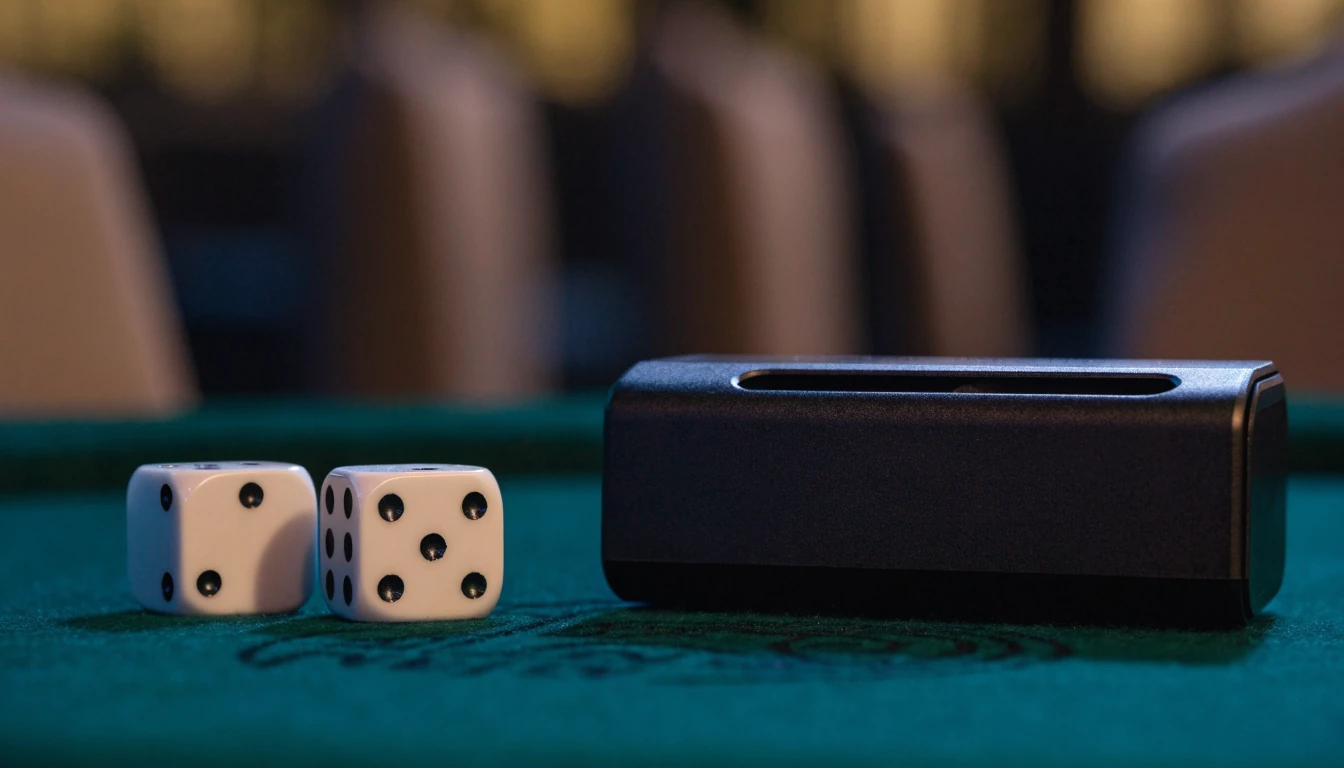
An online dice game brings casino play to a digital screen. You interact with a game through an online casino rather than sitting beside physical dice, but the important point is not how the result looks. It is how that result is produced. In a random-number game, selected numbers are generated by a computer or other gaming equipment. The result shown on screen represents the outcome produced by that process.
That distinction matters because a digital image of dice is not, by itself, evidence that physical dice are being rolled behind the scenes. A game may display dice or use dice-related imagery, while its outcome comes from generated numbers. The screen provides a way to present the result; the visual effect and the mechanism that determines an outcome are separate things.
In a random-number game, the system produces a number or set of numbers for the game to use. Those numbers determine the outcome according to the rules built into that game. The interface then communicates the result in a form that makes sense for the play: that might be a displayed number, a combination, or a visual representation.
When choosing a UK casino for dice games in 2026, it helps to consider how quickly you may receive a payout. Use the details below as a starting point when deciding what to check.
Chanze
Chanze lists a payout speed of 1–3 business days. If payout timing matters to you, keep this stated timeframe in mind.
Dieselwin
Dieselwin lists a payout speed of 1–3 business days. You can use that timeframe as one detail to consider.
WinBeast
WinBeast lists a payout speed of 1–3 business days. If you are weighing payout timing, this is the stated timeframe to note.
Jetsetspins
Jetsetspins lists a payout speed of 1–3 business days. Keep this stated timeframe in mind as you consider your options.
NightWin
NightWin lists a payout speed of 1–3 business days. This gives you a stated timeframe to consider when looking at payouts.
Britsino
Britsino lists a payout speed of 1–3 business days. You can factor this stated timeframe into your choice.
Amunbet
Amunbet lists a payout speed of 1–3 business days. If payout timing is relevant to you, this is the timeframe provided.
EvoSpin
EvoSpin lists a payout speed of 1–3 business days. Consider this stated timeframe when reviewing payout details.
Zombillion
Zombillion lists a payout speed of 1–3 business days. This gives you a stated payout timeframe to take into account.
Revery Play
Revery Play lists a payout speed of 1–3 business days. You can keep this timeframe in mind when considering payouts.
The exact presentation depends on the individual game. It is better not to assume that every online dice game works in precisely the same way just because dice appear in its name or artwork. A familiar image can make a result easy to understand, but it does not tell you whether the game uses physical dice, generated numbers, or another arrangement of gaming equipment.
The term “random-number game” describes a broad method of producing outcomes, not a guarantee about a particular title. Casino games are available online where the law permits, and some use numbers generated by a computer or other gaming equipment. That general description explains the digital format without establishing that every game labelled as dice uses the same technology or rules.
A rolling animation can make a result feel like a physical event unfolding in front of you. It is still useful to separate the animation from the outcome. The movement on screen is a presentation of play; it should not be treated as proof of how the result was selected. In a game that uses generated numbers, the relevant outcome is determined by those numbers, even if the screen represents it as dice tumbling and settling.
This is not a reason to assume that a game is unfair. It is a reason to avoid drawing technical conclusions from appearance alone. Graphics can suggest a familiar casino experience, but they do not explain the game’s internal operation. If you need to understand a particular title, its own rules and information are more relevant than the general look of the interface.
“Online dice” can describe different experiences, so the phrase does not identify one universal game. Rules, result displays, and the way a game is organised may vary. Some titles may present outcomes using dice imagery; others may use a different visual treatment. Without a specific game in view, it is safest to speak about the shared digital principle rather than claim that all online dice games follow a single procedure.
The same caution applies to labels such as “online casino dice” or “dice casino games online”. They describe a broad category for players, not necessarily one standard set of mechanics. The name alone does not tell you what outcomes are possible, how they are represented, or how a particular game applies its rules. Those details belong to the individual game.
It can help to read the game’s instructions before taking part. Look for an explanation of what the displayed outcomes mean and how the game determines a result. The instructions should describe that title, while the general idea remains straightforward: in random-number games, selected numbers generated by a computer or other gaming equipment are used to produce outcomes.
When you encounter an online dice game, treat the on-screen dice as part of the presentation unless the game’s own information explains otherwise. A visual roll does not establish that physical dice were used, and the word “dice” does not establish that every title has identical mechanics. The game’s stated rules are the place to understand what its results mean.
This broad distinction is useful whether you are looking at an online casino on a computer or another screen. The digital setting changes how the game is presented and accessed; it does not make every casino game mechanically identical. For random-number games, generated numbers are central to how outcomes are produced. The rest—the imagery, labels, and interface—helps communicate the particular game, but should not be mistaken for a complete account of its underlying process.
A game featuring dice imagery is not necessarily a table game. The useful distinction is the format: machine-style games are generally played by one person at a time, while table games are typically run by a croupier or dealer. That difference affects whether you are playing independently through a machine or taking part in a game presented as a shared table.
In a casino, a gambling machine does not usually need an employee to operate each play. You interact with the machine, and other customers do not take part in your individual game. This is the basic machine-style format, whether the screen shows dice, cards or another theme. A dice graphic by itself does not turn a machine game into a table game, and the appearance of a roll does not tell you who, if anyone, is dealing.
Table games have a different structure. Players compete against the casino, not against one another, and a croupier or dealer usually conducts the game. The dealer is part of how the table format is presented and managed; the players are not simply taking turns controlling a machine. A game with dice can belong to this format when it is organised around a table and conducted by a dealer.
The word “dice” describes an element of a game, not its format. Casino games with dice may be presented as machine play or as a table game. To understand which kind you are looking at, pay attention to how play is organised: whether you interact with a machine on your own, or whether the game is conducted at a table by a dealer.
This distinction also helps make sense of phrases such as “dice slots”. They point towards a slot-style or machine-style presentation, rather than proving that the game is a traditional table game. A slot can use dice as a visual theme without having a croupier. Conversely, a casino game with dice can be a table game if it follows that format. The theme and the structure are separate things.
For the same reason, searches for a “slots dice game” or “casino dice slots” can lead to descriptions that use similar words for different kinds of play. The wording alone cannot tell you whether there is a dealer, whether other people are involved, or whether the experience is machine-based. Look at the format description rather than treating dice imagery as a reliable guide.
Individual experience where you interact with a machine and casino staff are not required to conduct each game.
Games conducted by a croupier or dealer where players compete against the casino at a shared table.
Machine-style play is usually individual: one player uses the machine, and casino staff are not required to conduct each game. This can make the experience feel self-contained. You are not relying on a dealer to present the game, and the format does not put you in direct competition with other customers.
At a table, the dealer or croupier conducts play, and the relationship is between the players and the casino. Other customers may be present, but they are not your opponents simply because they share the table. That matters when deciding what kind of experience you want: a table format involves a person in the role of dealer, while machine play does not normally require that involvement.
Online, the screen may make both formats look like software interfaces, so a picture of dice or a table is not enough to identify how a game is structured. A virtual table image does not by itself establish that a live dealer is involved. Nor does a dice animation establish that a game belongs to the traditional table category. The distinction is about the way the game is organised, not just what appears on screen.
If you are comparing different kinds of casino play, separate three ideas: the theme, the format and the role of other people. Dice may be the theme. The format may be machine-style or table-based. Other people may be absent from an individual machine game, or a dealer may conduct a table game. Keeping those points separate prevents a slot-style game from being mistaken for a dealer-led dice table.
This also clarifies what terms such as “UK casino sites with dice games” can mean in practice: they may refer to more than one format, rather than a single standard kind of game. The phrase does not guarantee that a title is a slot, a live table or a particular style of dice play. Descriptions should identify the format; if they do not, the presence of dice alone is not enough to fill in the gap.
When a page labels something a dice slot, treat that as a clue about its presentation, not a complete explanation of play. When it describes a dice table game, look for whether a croupier or dealer conducts it. These terms are most useful when they tell you who takes part and how the game is run. That is a clearer basis for distinguishing machine-style play from table games than the graphics or the word “dice” on its own.
A welcome offer can look generous while leaving you with conditions that do not suit how you intend to play. Before choosing a dice casino, read the promotion’s full terms rather than relying on the headline. Check what you must deposit, which games qualify, how winnings are treated and what you need to do before withdrawing.
Wagering requirements describe how much you must stake before bonus funds or related winnings can be withdrawn. The total can be larger than the bonus itself: a £100 bonus with a 35x requirement would mean £3,500 in bets before cashing out. That example illustrates why the multiplier matters as much as the advertised amount.
For incentives offered from 19 January 2026, a specialist review reports a maximum wagering requirement of 10x bonus funds. The same type of review says one incentive cannot combine different gambling products, such as casino play and betting. When checking an offer, look for the exact requirement and the eligible product; do not assume a promotion applies to every game or activity on a site.
A welcome package may be split into stages, with a separate qualifying deposit required for each one. A specialist review reports that minimum deposit thresholds can apply at every stage. Check the terms before depositing, including whether a later stage requires another payment and whether you meet the offer’s eligibility conditions.
Offers should clearly state who can take part. Check the age and residency requirements, and make sure the promotion is available to you before you opt in or deposit. If any condition is unclear, do not treat the offer as confirmed until you understand how it applies.
Promotions may include free spins as well as bonus funds. A specialist review reports that some casinos cap winnings from free spins, so a large win may not be fully withdrawable. Look for a maximum cash-out amount, any separate wagering requirement on spin winnings, and a deadline for using the spins. These details can change the practical value of the offer.
Also check whether the bonus is credited automatically or needs to be activated. If you must opt in, confirm when to do so. Terms should explain how bonus funds are used and what happens if you withdraw before meeting the conditions; do not assume an early withdrawal leaves the bonus untouched.
The best dice casino for you is not necessarily the one with the largest headline bonus. A promotion may be poor value if its qualifying games do not match your plans, if the wagering requirement is difficult to complete, or if a cap restricts what you can keep. Consider the offer as a set of rules, not as extra money already available to withdraw.
Keep a note of the key conditions before accepting: deposit requirements, wagering, qualifying games, expiry and limits on winnings. If you cannot find a clear explanation, or the terms appear to conflict with the offer, pause rather than depositing to resolve the uncertainty later. You should be able to understand what is required before committing money.
A dice-roll slot combines the visual language of dice with a slot-style casino game. The dice may appear in the artwork, symbols or presentation, giving the game a rolling-dice theme. That theme does not, by itself, tell you how the game determines results or what kinds of outcomes are possible. The rules for the particular game matter more than its name or graphics.
This distinction is useful when you come across phrases such as “dice and roll” or “rolling dice” in a game description. They can point to a dice-inspired slot format, but they are not a reliable description of a single, standard set of rules. A dice-themed slot should not automatically be treated as a traditional casino dice game, where a player stakes on possible outcomes or combinations. The slot label and the game’s own rules are what you need to understand before deciding whether its format suits you.
A dice-roll slot game can also be discussed as a visual concept without implying that a specific title is available. Dice imagery may make the presentation feel familiar, but it cannot tell you how often a winning result occurs, how much it pays, or whether a particular play will be successful. Those details depend on the actual game, not on the idea of rolling a die.
The appearance of dice can make results seem linked to a physical roll. In a casino game, though, a themed animation is not enough to establish how an outcome is produced. Treat the visuals as presentation, rather than evidence of a player-controlled roll or a predictable pattern. A sequence of symbols that looks like a dice result does not make the next result easier to forecast.
That matters because it is easy to read meaning into repeated images or outcomes. A run of results can feel as if it is building towards a particular finish, but past results do not provide a dependable promise about what comes next. The theme may invite you to think in terms of luck and rolling, while the game remains a casino activity with uncertain outcomes.
The same caution applies when a game is described as a dice and roll slot. The words may help you picture its style, but they do not substitute for its rules. If you are considering a game, read how its results and payouts are explained rather than relying on the title, artwork or an assumption that a dice theme works like a physical dice game.
Casino games can produce short-term gains for a player. That possibility is real, but it sits alongside a predictable long-term advantage for the casino. A win during a brief session does not show that the game has shifted in your favour, and a losing run does not mean a win is due. The dice theme does not change that basic expectation.
This is worth keeping in mind whether you are looking at dice roll slots, a slot with dice symbols, or another game presented around rolling. A striking result can feel significant, especially when it matches the theme, but it is still one outcome. Avoid treating a short run of wins as a dependable way to make money or as proof that you have found a pattern.
If you choose to play, decide in advance what you can afford to lose and stop when you reach that point. Keep the distinction clear: dice imagery may shape the experience, but it does not remove the casino’s long-term advantage or make future outcomes certain.
Casino dice gambling means staking cash or chips on a possible random outcome, or on a combination of outcomes. The result determines whether a stake wins or loses under the game’s rules. That is the central idea behind casino dice: you put something of value at risk because an uncertain result may match the outcome you chose.
The word “dice” can suggest a familiar object, but the label alone does not tell you exactly how a casino game works. A game may present results as numbers or combinations, yet its name is not enough to establish which outcomes are available, how a stake is settled or what rules apply. Those details belong to the specific game, rather than to the broad category of casino dice.
This distinction matters when you encounter terms such as “dice game” or “dice casino”. They describe a general theme, not a promise that every game uses the same setup. Two games can both be presented as dice-based while asking players to stake on different possible results. Before treating them as equivalent, you would need to understand the rules attached to each one.
A casino dice game is therefore not simply a test of whether you can predict a roll. Casino gambling centres on a stake and a possible result, with the game’s rules determining how that result relates to the stake. The uncertainty is part of the activity; familiarity with dice does not remove it. Knowing what a number or combination means in one setting does not automatically explain what it means in another.
For the same reason, the phrase “casino dice” should not be taken as a description of a verified, standardised title. It is more useful to think of it as a broad label for casino play involving stakes on random outcomes associated with dice. The exact experience depends on the particular game’s stated rules and presentation.
If you are trying to understand the subject before playing, start with that basic definition: cash or chips are staked on possible random outcomes or combinations. Keep the category separate from assumptions about how a result is generated, whether other players are involved, or what a particular game offers. Those are separate details, not things the general label can settle.
This gives “casino dice” a clear meaning without treating every dice-themed game as interchangeable. It also keeps the focus on what makes it gambling: a stake is placed, the outcome is uncertain, and the rules connect that outcome to the stake.
A dice casino demo, when offered, can give you a low-pressure introduction to the broad idea of casino play. It may help you recognise that a game presents possible outcomes and invites a choice or stake. That is a starting point for understanding the format, not proof that every dice game follows the same rules or presents them in the same way.
Treat a free-play version as a demonstration rather than a forecast. A result seen during practice does not tell you what will happen in a later session, and a run of favourable outcomes is no guarantee of a win with money at stake. Casino games can allow short-term gains, but their design typically gives the casino a predictable advantage over the long term. Free play does not remove that underlying feature of gambling.
The label matters less than the details shown on the screen. If a site offers a dice game demo, read the rules and pay attention to what the game asks you to do before treating it as a useful introduction. A dice slot demo, for instance, should not automatically be assumed to work like a table-style dice game. Nor does a demonstration labelled as craps establish that every online craps game uses identical rules or controls.
The same caution applies to promotional language such as “free spins”. A free-play mode and a promotion are not necessarily the same thing. Do not assume that a demo gives you a cash balance, that any practice result can be withdrawn, or that a promotional feature is included unless the terms clearly say so.
A demo can be useful for deciding whether the general presentation makes sense to you. It cannot show that you will win, establish how a different version behaves, or make real-money play risk-free. If the rules are unclear, pause rather than treating a few practice rounds as enough to understand the game. Real-money gambling puts your own funds at stake, so keep the distinction between trying out an idea and wagering cash clear.
The word “crypto” describes a payment option, not a particular kind of casino game. A platform that accepts cryptocurrency is not necessarily offering a specific dice game, and a dice-themed label alone does not confirm what is available to play. Check the platform’s actual game catalogue and payment information rather than assuming the two features come together.
A specialist review of alternative platforms reports that some may accept Bitcoin, Ethereum or Litecoin alongside conventional cards and e-wallets. Payment options can differ between platforms, so treat that as a possibility to verify, not a standard feature. The presence of a cryptocurrency option also says nothing by itself about the game rules, how outcomes are generated or whether a particular craps-style game is offered.
Keep the payment decision separate from the gambling decision. Before depositing, establish which currency your account uses, what payment methods are accepted and whether the platform explains how deposits and withdrawals are handled. If those details are unclear, you cannot reliably judge what using that payment option will involve. Do not assume that a familiar cryptocurrency name means the transaction will work in the way you expect.
Cryptocurrency does not change the nature of casino gambling: you are still staking value on possible outcomes. Nor does using it change an operator’s regulatory status. For UK players, payment convenience is not a substitute for checking whether a real-money gambling site is legally authorised to serve customers in Great Britain.
If you are looking for dice play, confirm that the platform actually lists the format you want. Terms such as “dice” or “craps” can describe different game ideas, and a payment page cannot tell you which games are present. Review the available game information before moving money, and avoid treating a broad promotional label as proof of a specific title.
This distinction matters because payment methods and game availability are separate choices. A platform may support digital currencies without offering the dice format you had in mind; another may list dice play while providing different ways to pay. Check each point independently and make sure you understand the terms before deciding whether to proceed.
Bitcoin is one payment option that alternative gambling platforms may accept. Some may also take Ethereum or Litecoin, while conventional cards and e-wallets can be offered alongside cryptocurrency. Availability depends on the platform, so the presence of Bitcoin in a payment list does not establish that a particular dice game is available there.
A specialist review describes these payment options, but treat its claims as a starting point rather than a guarantee. Check the platform’s own current cashier information before making decisions: supported currencies, deposit and withdrawal methods, and any conditions attached to them can differ. Also confirm whether a balance is held in Bitcoin or converted into another currency, and how the platform displays transaction values. Do not assume that a cryptocurrency deposit can be withdrawn by the same route or without additional steps.
The word “dice” can refer to different kinds of casino play. Sic Bo, for instance, is a dice-table format; a Bitcoin payment method alone does not tell you whether a platform offers Sic Bo, another dice game, or a slot with dice imagery. Check the game’s rules and the way stakes and results are presented rather than relying on a label.
A dice casino bonus may have separate conditions from its payment methods. Read the offer terms before depositing, including what funds qualify, how wagering requirements apply, and whether winnings are subject to restrictions. A bonus is not the same as withdrawable cash, and using Bitcoin does not remove the need to understand those terms.
For UK players, there is a further distinction between payment access and legal status. A platform accepting Bitcoin is not thereby authorised to offer online gambling in the UK. Online gambling is legal in the UK only through licensed and regulated sites; operators serving British customers must hold the relevant UKGC licence. Offshore platforms operate outside that system, so a familiar payment option should not be treated as evidence of UK authorisation or player protection.
Keep your spending decisions separate from the choice of payment method. Cryptocurrency can make a deposit feel like a transfer rather than a cash stake, but it remains money committed to gambling. Check the amount carefully before confirming a transaction, and do not deposit funds you cannot afford to lose.
Before you place a stake, establish what the game treats as a possible result and what each betting option means. Casino play centres on risking cash or chips against random outcomes, or combinations of outcomes. The wording on the table or screen matters: a bet on one result is not the same as a bet on a combination, and the rules determine whether either wins.
Start with the game’s instructions rather than assuming that familiar dice mean familiar rules. Check how a round begins, which outcomes you can select, when bets are settled and what the stated casino dice payouts apply to. If any part is unclear, pause before staking. A payout describes what a winning selection returns under the rules; it does not make that result more likely.
In a random-number game, selected numbers are generated by a computer or other gaming equipment. Those numbers determine the result, so a previous outcome does not tell you what the next one will be. Treat each round as a separate event, and avoid increasing a stake because you believe a particular result is due.
People asking how to play casino dice games may have a specific table game in mind, but the word “dice” alone does not identify one set of rules. Craps, for instance, should not be approached on the assumption that every casino uses the same layout or betting terms. Read the instructions for the particular game and make sure you understand the options before joining in. If the rules are not clear, do not guess.
Set the amount you are prepared to risk before play and keep each stake within that boundary. Cash or chips committed to a bet are at risk; a sequence of results can include losses, and a short-term win is not a reliable guide to what will happen next. Take time to check the rules and the possible outcomes, then decide whether the game makes sense to you. If it does not, stepping away is a sound choice.
A dice casino’s location and its legal status are not the same thing. A platform may be based overseas, but if it takes bets from British residents, it must hold the relevant UKGC licence. The Gambling (Licensing and Advertising) Act 2014 established this requirement for operators serving the British market.
A specialist review characterises the online casino market in 2026 as having two parallel parts: UKGC-licensed operators and offshore platforms outside the UKGC system. Offshore casinos may accept UK players, but that access does not make them licensed to serve the British market. The distinction matters whether you are looking for dice games at a casino or considering another type of online gambling.
At a UKGC-licensed site, the operator is subject to the British regulatory framework. Offshore platforms operate outside that framework and do not hold a UKGC licence. So a site’s willingness to accept a deposit or let you create an account is not proof that it is authorised to offer gambling to people in the UK.
Before treating a site as a UK casino, establish whether it holds a current UKGC operating licence. This is a question of authorisation, not a ranking of dice casino sites or a judgement about how attractive their games appear. If a platform is offshore, its acceptance of UK players should not be confused with UKGC approval.
The practical point is straightforward: UK players may encounter both licensed operators and offshore platforms, but only a current UKGC licence places an operator within the British regulatory system. Check the licence status before you play, and do not assume that a dice game’s availability makes the site itself lawful for the UK market.